



In April 2026, Ukrainian President Volodymyr Zelenskyy announced new agreements on security cooperation between Ukraine and India. Two years earlier, in August 2024, a historic event took place: the first official visit to Ukraine was made by Indian Prime Minister – Narendra Modi. At that time, he declared his support for Ukraine’s sovereignty, a gesture interpreted bysomeasan attempt to whitewash himself in the West due to regular cooperation with Russia. Shortly before this visit, Modi received the Order of St. Andrew the First-Called directly from Putin for promoting partnership and friendship between India and Russia. That is, the two countries continue to trade actively; in particular, India buys sanctioned Russian oil, despite the restrictions. StateWatch analysts, in cooperation with the NGO Liberal Democratic League of Ukraine, examined trade between Russia and India, parallel imports of dual-use goods, and the world’s most populous country balancing in global geopolitics.
Indian policy is based on strategic autonomy and pragmatism. The country simultaneously participates in projects that limit US influence and in initiatives aimed at containing the People’s Republic of China (PRC). This demonstrates India’s desire to claim the role of an independent global player. Given its relations with the US and China, it is not in India’s strategic interest for Russia to be diminished to a mere raw-material supplier or a junior partner to the PRC. This would change the already asymmetric balance of power in the region in favour of the PRC. Therefore, India balances in every way.
ARE INDIA-RUSSIA RELATIONS FADING, OR FORGING AHEAD?
Historically, India-Russia relations have been built on nostalgia for the Indo-Soviet friendship and partnership. The current interaction between the two countries is actually based on three main pillars – energy, defence, and diplomacy.
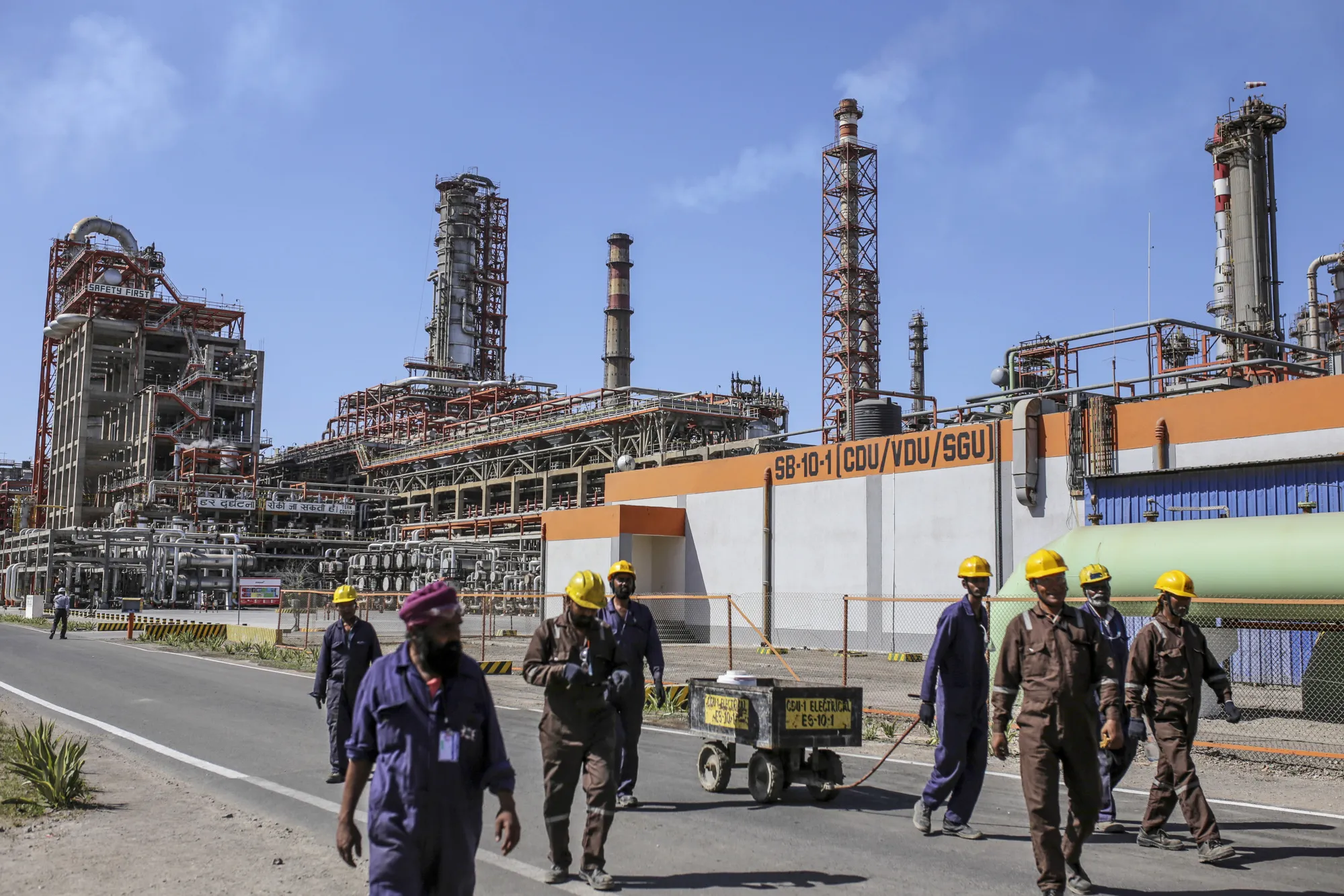
In 2024, official bilateral trade between India and the Russian Federation reached a record $68.7 billion. However, in 2025, it fell by 10%, according to the Russian trade mission in India, mainly due to lower oil prices. Russia has become the main supplier of oil to India (36% of its total imports), allowing New Delhi to save more than $13 billion due to discounts. Despite regular US pressure and sanctions on companies, India still uses loopholes to re-export oil products to the EU and switches to payments in national currencies or UAE dirhams.
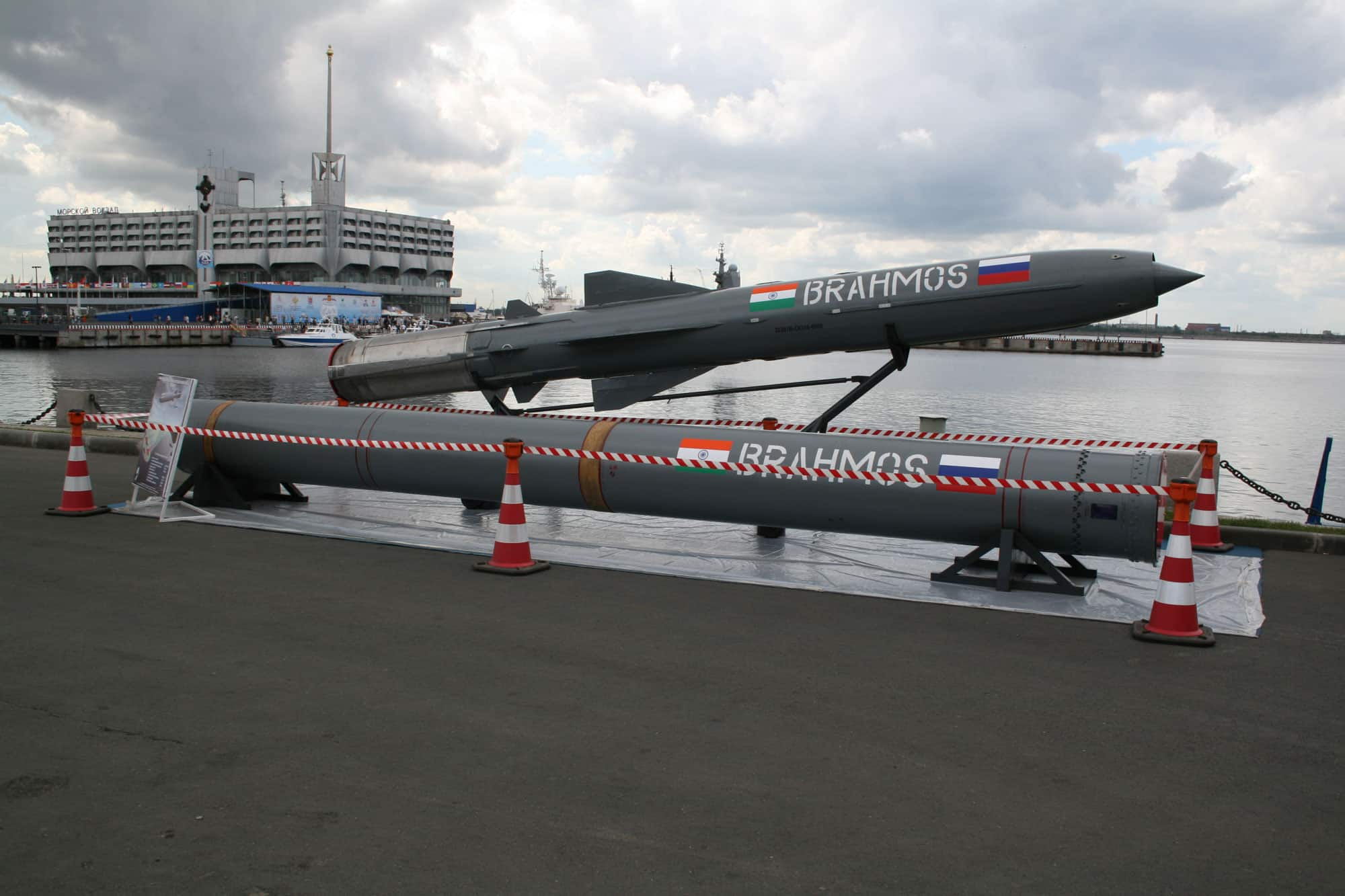
Russia also remains India’s main arms supplier, but the share of Russian arms in total imports is falling rapidly (from 55% in 2015–2019 to 36% in 2020–2024). Due to delays in S-400 deliveries, the war in Ukraine, and global geopolitical changes, India is actively increasing purchases from France and the United States, while maintaining the aforementioned strategic autonomy. Cooperation in the defence sector between the countries also takes place through regular exchanges, joint military exercises, and agreements on joint production. Thus, located in India, BrahMos Aerospace is a joint venture between the Indian Defence Research and Development Organisation (DRDO) and the Russian NPO Mashinostroeniya, which developed the BrahMos supersonic cruise missile of the same name. It is based on the P-800 Onyx, and the name is a combination of the names of two rivers: the Brahmaputra in India and the Moscow River in Russia.
WHAT IS BEHIND THE EXPORT OF DUAL-USE TECHNOLOGIES FROM INDIA TO RUSSIA?
After the start of the full-scale invasion, India has become one of the key jurisdictions through which Russia receives critical products for its military-industrial complex. According to available Indian export data, over the four years of the war – from February 24, 2022 to February 28, 2026 – India shipped over $1.3 billion worth of dual-use goods from the CHPL list to the Russian Federation.
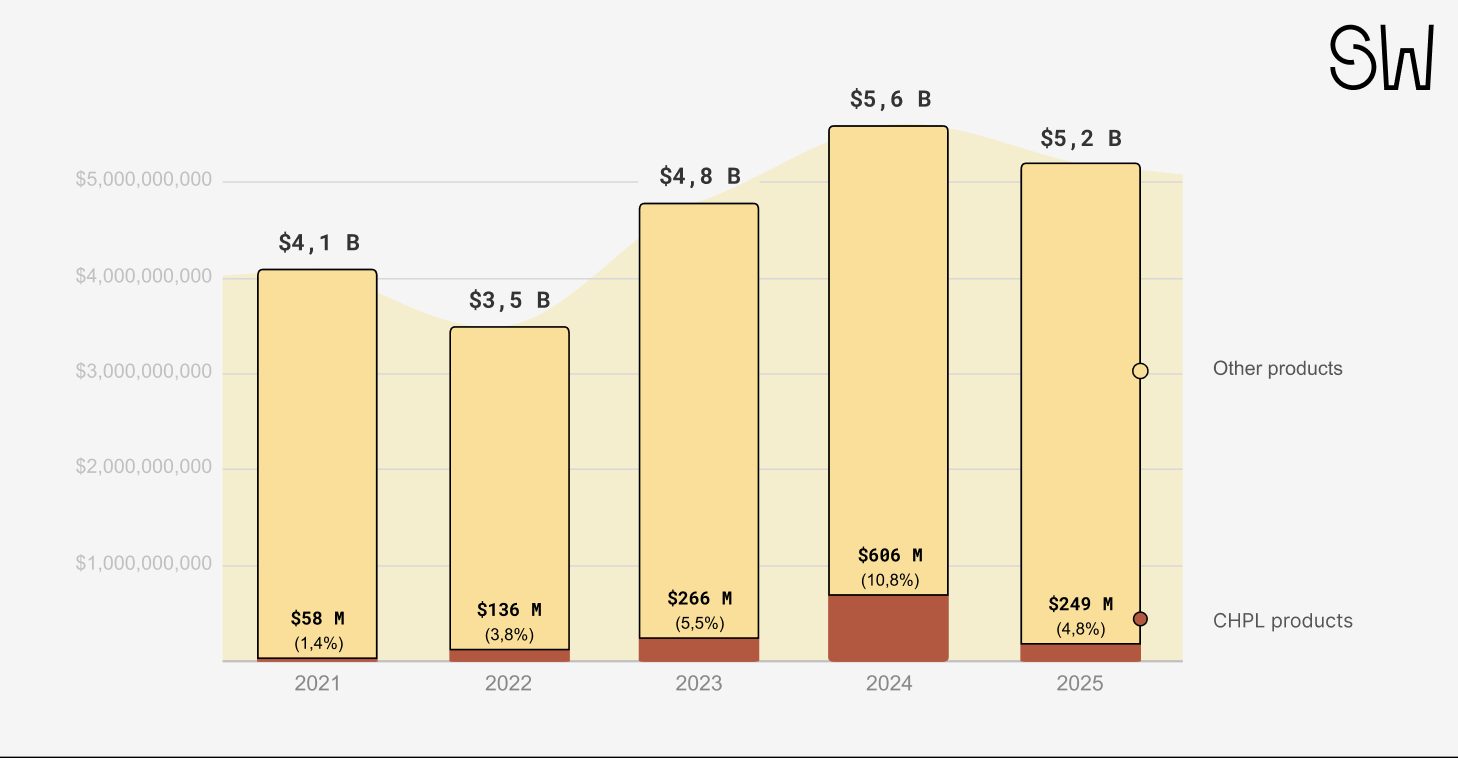
The most intensive period of supply was in the spring and summer of 2024, when the Russian Federation received high-tech American-made servers worth hundreds of millions of dollars through Indian intermediaries. According to Indian media estimates, as of autumn 2024, one in five CHPL goods entering the Russian military-industrial complex were shipped through India.
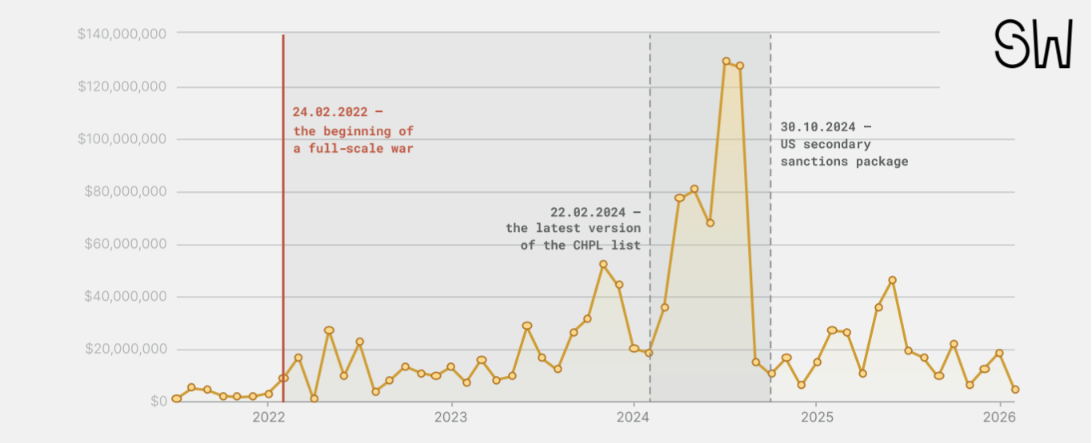
In July 2024, US Deputy Treasury Secretary at the time, Wally Adeyemo, sent a letter to senior officials of the Confederation of Indian Industry, in which he warned about the risks of sanctions threatening Indian companies and banks that do business with the Russian military-industrial complex. The Indian Ministry of Foreign Affairs refused to comment on this at the time. As a result, on October 30, 2024, the US adopted a large package of secondary sanctions against countries that helped Russia obtain dual-use products. The list included two Indian citizens and 19 Indian companies.
New Delhi reacted to the restrictions, stating that the sanctioned companies acted exclusively within the framework of national legislation. At the same time, the Indian government assured that it is in constant contact with Washington and is already working on explanatory measures to familiarise local businesses with the current US export control rules in detail. One way or another, the goal was achieved. According to Indian exports, during the fall of 2024, the supply of CHPL products from India to the Russian Federation decreased by 7.5 times compared to the summer of the same year.
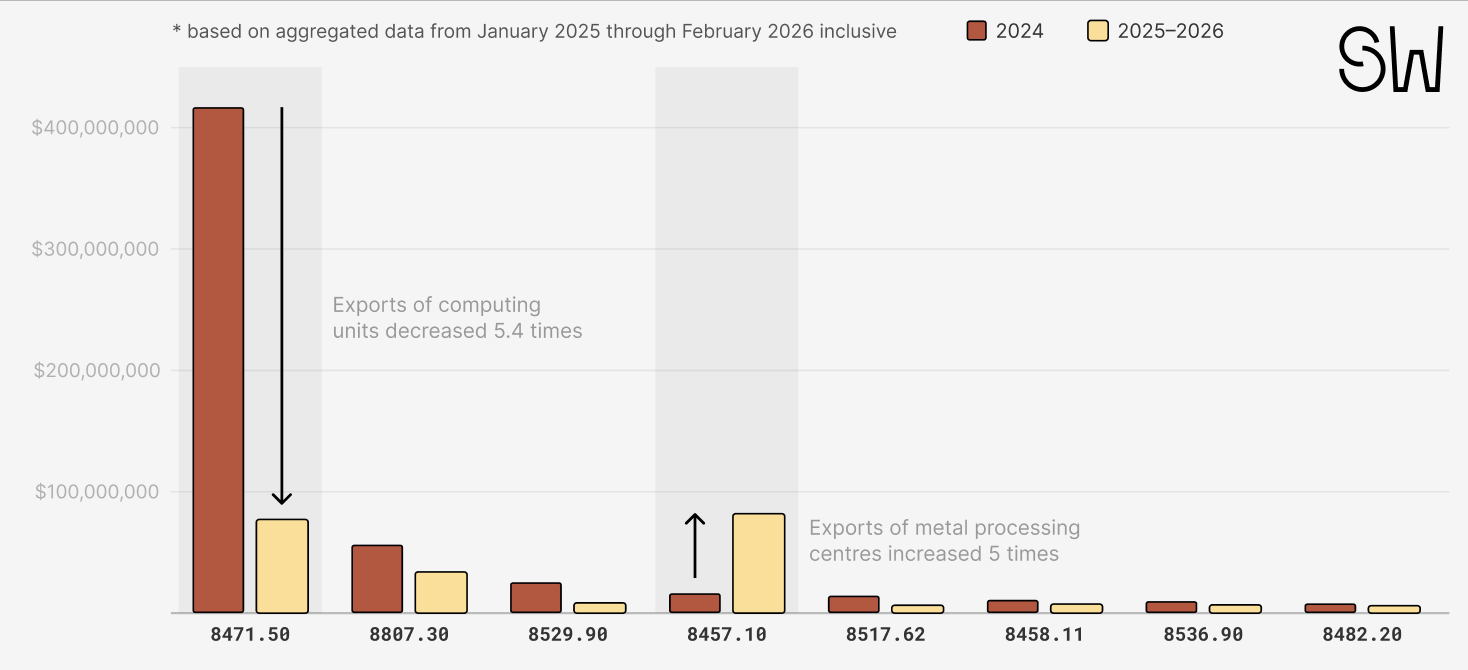
During 2025, exports of CHPL products from India to the Russian Federation decreased by 2.4 times compared to 2024, amounting to $248.6 million, and the amount of supplies for the first two months of 2026 amounted to $23.6 million.
In 2025–2026, the ranking of CHPL products by export value is headed by metalworking centres, whose volume of supplies increased 5 times compared to the previous year. Other categories of goods included aircraft parts, communication modules, servers, electronics and bearings. Today, almost all production of military equipment – missiles, drones, tanks and aviation – is carried out using the aforementioned specialised metalworking CNC machines, which can be programmed to automatically manufacture metal components of complex shape without the direct participation of the operator.
In fact, India’s sanctions regime is based on two principles: mandatory implementation of UN Security Council resolutions and refusal to join the so-called “unilateral sanctions” of individual states. This means Indian companies are not obliged to comply with international restrictions on the Russian Federation, but are forced to take into account the risk of secondary US sanctions due to their integration into the global financial system. In fact, the balancing act between the West’s sanctions policy and its own economic interests leads to the fact that Russia continues to replenish its stocks of critical components through India, which later end up in Russian weapons that daily terrorise Ukrainians, and now other European countries.
This material was produced with the support of the International Renaissance Foundation. The material represents the views of the authors and does not necessarily reflect the position of the International Renaissance Foundation.