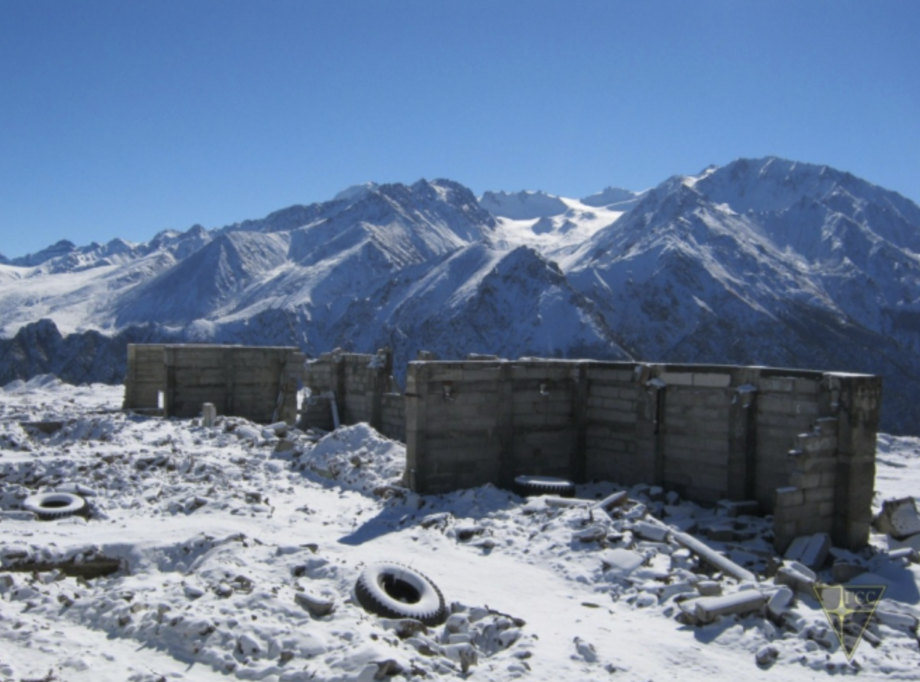

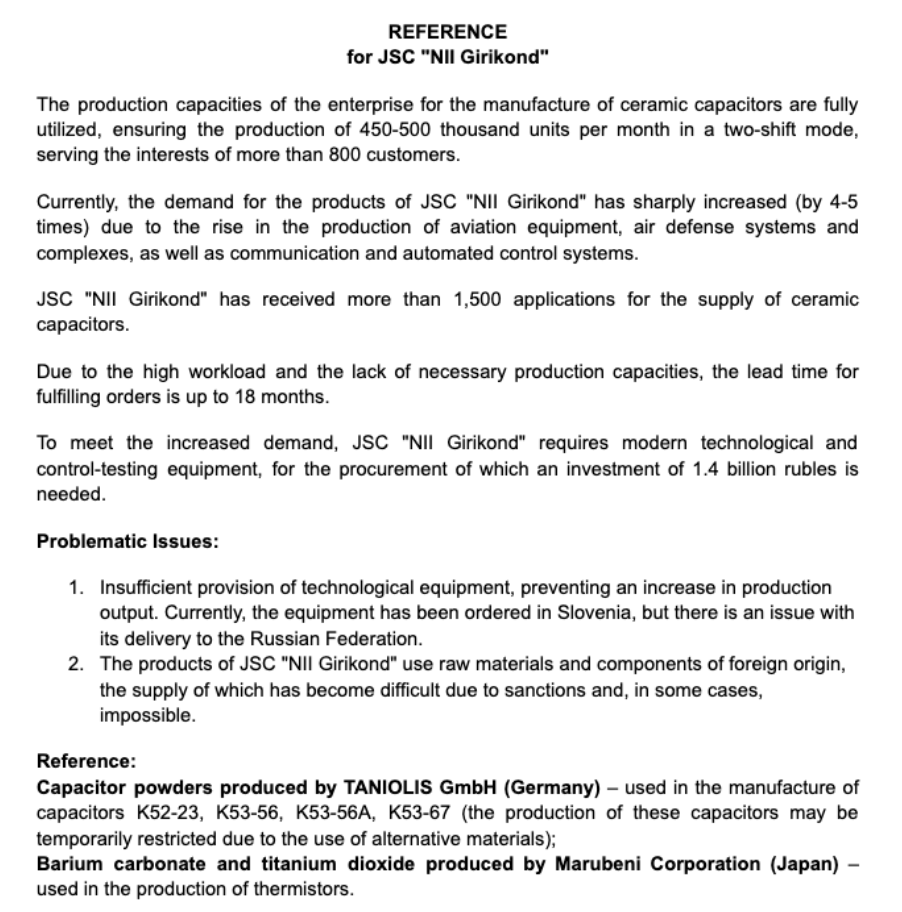
Despite large resource reserves, some critical metals remain import-dependent for Russia. Many deposits are located far from civilization and in difficult climatic conditions. Therefore, domestic metal production for the Russian Federation is less profitable than purchasing the necessary raw materials abroad. However, after the imposition of sanctions, Russian enterprises were left without European metals. In particular, the manufacturer of capacitors for aviation JSC NII “Girikond” lost access to tantalum metal, which was previously supplied from Germany.
Analysts found that Russia is actively restoring old tungsten and tantalum deposits, in particular at the Tyrnyauz and Kti-Teberdinsky deposits. Moreover, due to sanction restrictions, the country is forced to look for alternative ways to supply equipment and technologies, mainly through Turkey, China, and South Africa. As of 2024, Russia remains dependent on foreign technologies, and the share of imported equipment, technological solutions, and software is very high:
- drilling equipment, laboratory and analytical equipment, and specialized software – over 90%;
- mining machinery – 50%;
- ground geophysical equipment – 30%.
Despite active attempts to overcome technological isolation, Russia has not yet been able to close the production cycle fully and remains dependent on imports of critical metals. For more information, see the full Trap Aggressor investigation.