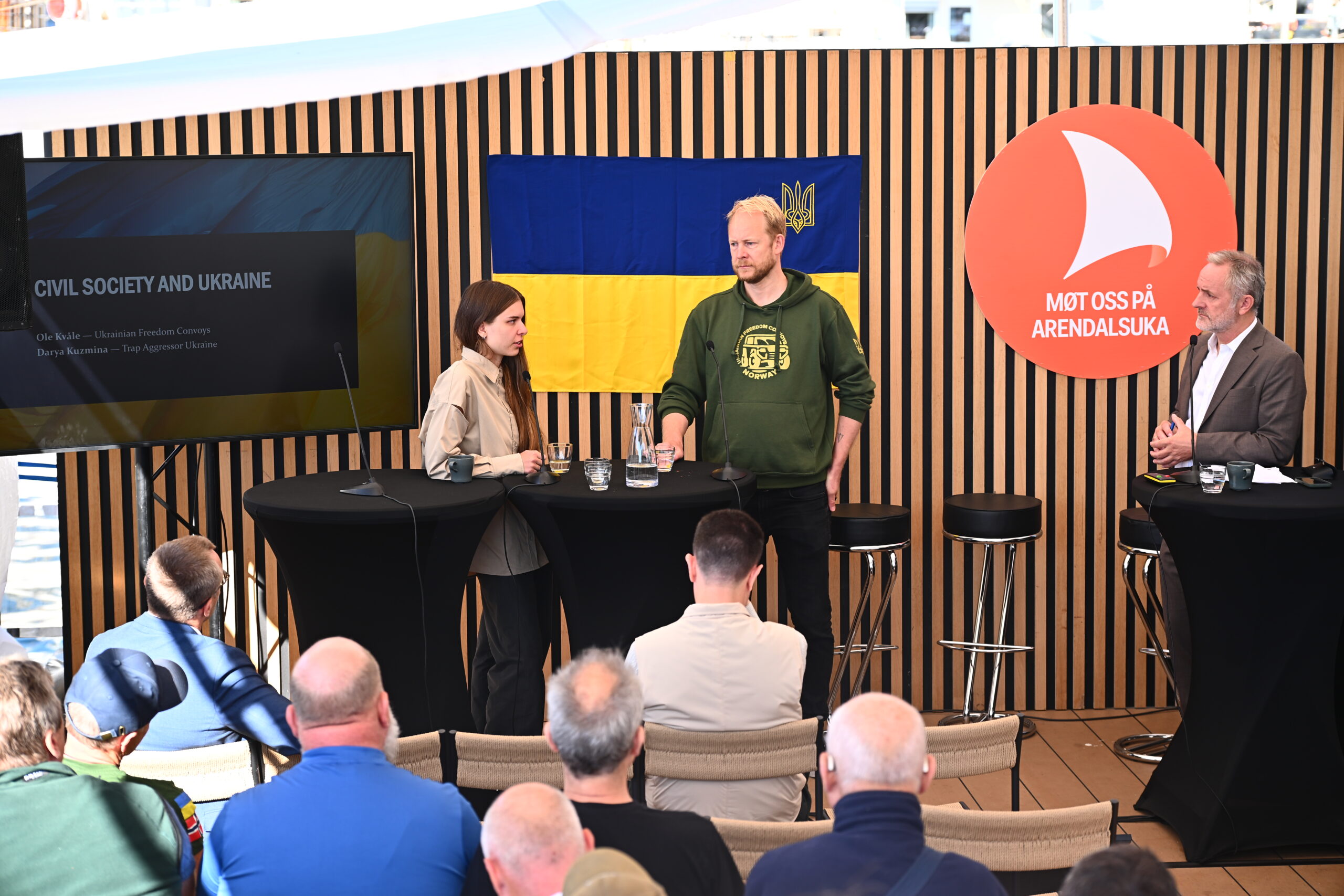
StateWatch Think Tank presented two reports on gaps in Norway’s sanctions regime at Arendalsuka, Norway’s democracy festival. StateWatch analysts found that the volume of trade between Norway and Russia has remained almost unchanged since the start of the full-scale invasion: while direct trade has declined, indirect trade through intermediaries in third countries has increased.
The reports were presented at Arendalsuka by Daria Kuzmina, Head of Sanctions at StateWatch. Both reports were prepared in partnership with the Norwegian analytics company Corisk. They will soon be available on StateWatch website.
What is Arendalsuka?
Arendalsuka is Norway’s largest annual political and civic festival, bringing together politicians, civil society organisations, businesses, and the media for open debate and to strengthen trust in democracy.
What does the Industry Watch List show?
The Industry Watch List serves as a guide for Norwegian industry. It identifies goods, raw materials, and minerals that are critical to Russia’s military-industrial complex. Companies should exercise caution and responsibility when exporting these goods, as they often ultimately end up in Russia. The report also identifies high- and medium-risk intermediary countries.
What does the Sanctions Lab List show?
The Sanctions Lab List identifies specific gaps in the EU and Norwegian sanctions regimes. In particular, Norwegian ports remain accessible to Russian logistics.
Why sanctions lists alone are not enough
Both reports point to the same problem: compliance with sanctions lists alone cannot stop trade with Russia. Indirect trade through intermediaries in third countries has increased significantly. Manufacturers of dual-use goods and critical raw materials must also verify the end users of their products.
Key findings:
- The overall volume of trade between Norway and Russia has remained largely unchanged since 2022 — instead, trade has shifted into less transparent channels through intermediaries in third countries.
- Norwegian ports remain accessible to Russian logistics — one of the key gaps in the sanctions’ regime.
- Compliance with sanctions lists alone is not enough: manufacturers of dual-use goods must conduct their own due diligence on end users.