
On February 24, the European Union adopted the 16th package of sanctions against Russia. This is stated on the official website of the European Council. The restrictions are aimed at the so-called “shadow fleet” of Russia, its oil tankers, operators, propagandists, and companies in the technology and defense sectors. The sanctions list also includes 48 individuals and 35 organizations. Among them are 10 individuals involved in the Trap Aggressor investigations.
General Director of the Almaz-Antey Aerospace Defense Concern Yan Novikov
Yan Novikov is the director of the Almaz-Antey Concern, a key manufacturer of air and missile defense systems in Russia. The concern manufactures S-300, S-400, S-500, Buk, Tor and other systems that are actively used in the war against Ukraine. In particular, high-precision Kalibr missiles, which have destroyed many Ukrainian homes. The enterprise is controlled by the state and not only meets military needs, but also tries to integrate into the civilian sector of the Russian Federation. However, its main role remains unchanged – to supply Russia with deadly weapons that destroy Ukrainian cities.
Valery Shadrin, founder and CEO of Promtekh, and his son Alexei Shadrin
Valery Shadrin is the head of the Russian group of companies Industrial Technologies (Promtekh), which supplies components for aviation, rocket and space, and armored vehicles. Despite the sanctions, Promtekh’s companies continue to receive critical Western components through a network of intermediaries, including the Turkish company Enütek. An investigation by Trap Aggressor in cooperation with European media revealed that in 2023, Promtekh imported millions of dollars worth of CNC machines for the production of military equipment, and its companies supplied wires to the Russian tank manufacturer Uralvagonzavod. Despite attempts to hide the traces through foreign jurisdictions, the documents prove that Shadrin and his corporation play a key role in supporting the Russian military-industrial complex. Alexei Shadrin (son of Valery) is also on the sanctions list. He was the first CEO of the French company ITGF, which until 2022 belonged to Promtekh and supplied Western components to the Russian military-industrial complex. Under his leadership, the company provided Promtekh enterprises with dual-use technologies used in the production of military equipment.
Promtekh is a Russian manufacturer of military components that circumvents sanctions through intermediaries
Promtekh Corporation is also subject to EU sanctions. It supplies electronic components for the military-industrial complex, including Roscosmos, Rosatom, and Russian Helicopters, and regularly demonstrates its products at military exhibitions. Despite the sanctions, the corporation receives Western equipment using complex re-export schemes and produces import-substituting components for the Russian army. One of its factories, the Dubna Cable Plant, has been certified by the Military Register, which confirms its direct involvement in supplying the Russian military industry.
Enütek is a Turkish intermediary for the supply of Western technologies to Russia
The Turkish company Enütek plays a key role in the schemes for the supply of Western technologies to the Russian military-industrial complex, in particular for the Promtech group. In 2023, Enütek exported $7.7 million worth of products to Russia, including components used in military equipment. In particular, Russian enterprises received CNC machines and other critical parts required for the production of weapons through the company.
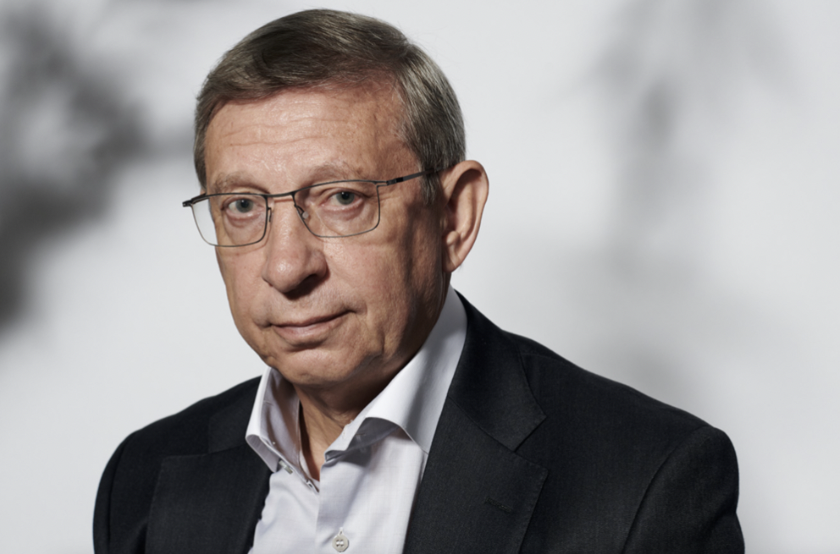
Founder and co-owner of Sistema JSFC Vladimir Yevtushenkov
Sistema JSFC controls a number of companies related to the Russian military-industrial complex. Yevtushenkov’s companies provide Russian defense plants with critical components, including microchips and communication systems. Sistema also created Element, which is the largest microelectronics manufacturer in Russia and produces integrated circuits, semiconductor devices, power electronics, and electronic equipment. It includes Mikron (the largest chip manufacturer in Russia), Progress, and others. At the same time, Mr. Yevtushenkov and his family continue to do business in Europe, owning real estate in France, the UK, and Luxembourg.
Vadim Badekha, CEO of United Engine Building Corporation
Vadim Badekha is the CEO of United Engine Building Corporation (UEC), a part of Rostec that produces aircraft and unmanned aerial vehicles for the Russian military-industrial complex. Prior to that, he was in charge of the Ural Civil Aviation Plant (UZGA), which developed and supplied the Russian army with Forpost-R, Altius, and Corsair UAVs. Already under Badieha’s leadership, the UDC announced the creation of a center for the development of small turbojet engines for drones, which should speed up their production for the war against Ukraine. Despite his active involvement in the Russian military-industrial complex, Badieha has not been subject to EU and US sanctions to date.
Donobuv and Faraday: manufacturers of military footwear for the Russian army
Russian companies Donobuv and Faraday provide the Russian army with military footwear. Donobuv cooperates with the Russian Ministry of Defense, works in three shifts to fulfill defense contracts, and, despite the sanctions, in 2023 received leather from the German Salamander Sps Gmbh & Co Kg for $60,000. Faraday supplies footwear to the Russian security forces. In 2022, it received government orders worth $50 million, and in 2023, it purchased raw materials from the European Conceria Cervinia Spa, Jakob Keck Chemie Gmbh, and Salamander Sps Gmbh & Co Kg.
Alabuga Machine-Building Company is a Russian drone manufacturer cooperating with Iran
The company is located in the Alabuga Special Economic Zone (Tatarstan, Russia) and manufactures drones for the Russian army. Alabuga is part of a large-scale project to create Shahed-136 (in Russia, Geranium-2) kamikaze drones using Iranian technology. Production is largely dependent on imported electronic components supplied by third countries to circumvent sanctions. In 2023, the company received technical support from Iranian experts and planned to increase drone production by 2025 in an effort to reduce dependence on supplies from Iran.
Read more about the 16th EU sanctions package, introduced to mark the third anniversary of Russia’s full-scale invasion of Ukraine, in Trap Aggressor.