Asana, the US-based project-management platform, confirmed to StateWatch’s Trap Aggressor investigative project that it continues to serve users in Russia.
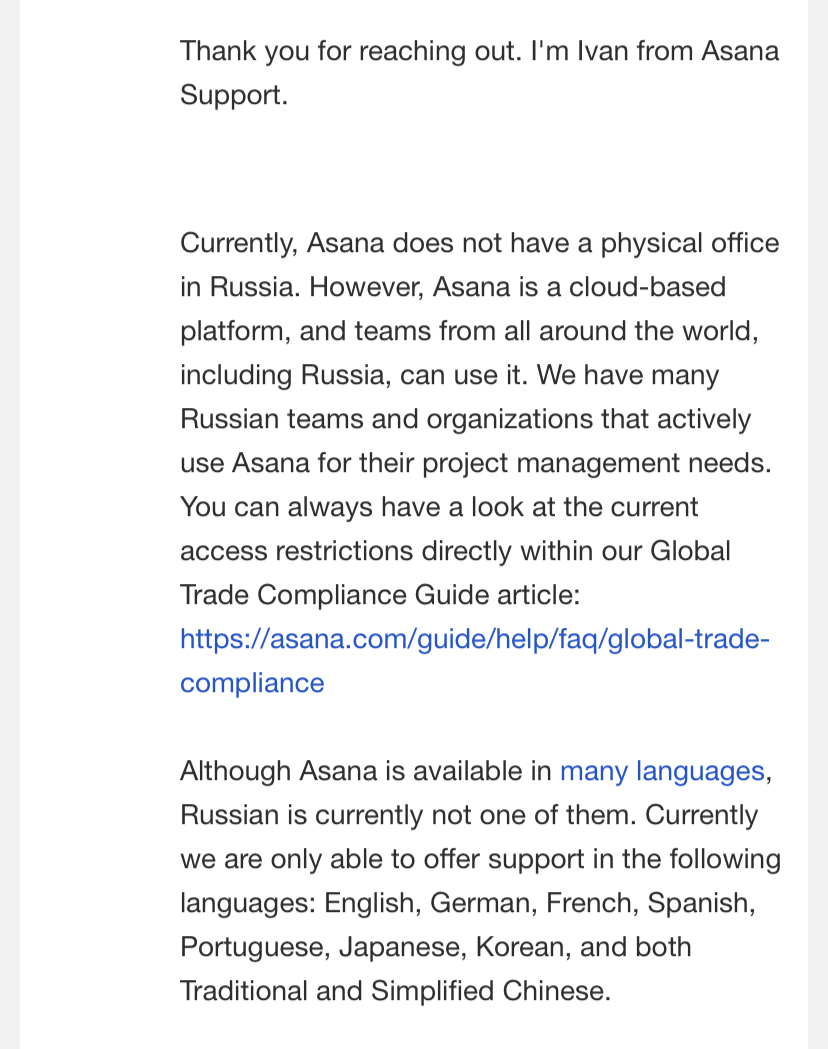
Trap Aggressor decided to check whether Asana works in Russia and wrote a letter to the sales and customer support departments listed on the company’s website. Asana is a US-based platform designed to organize, track, and manage teamwork.
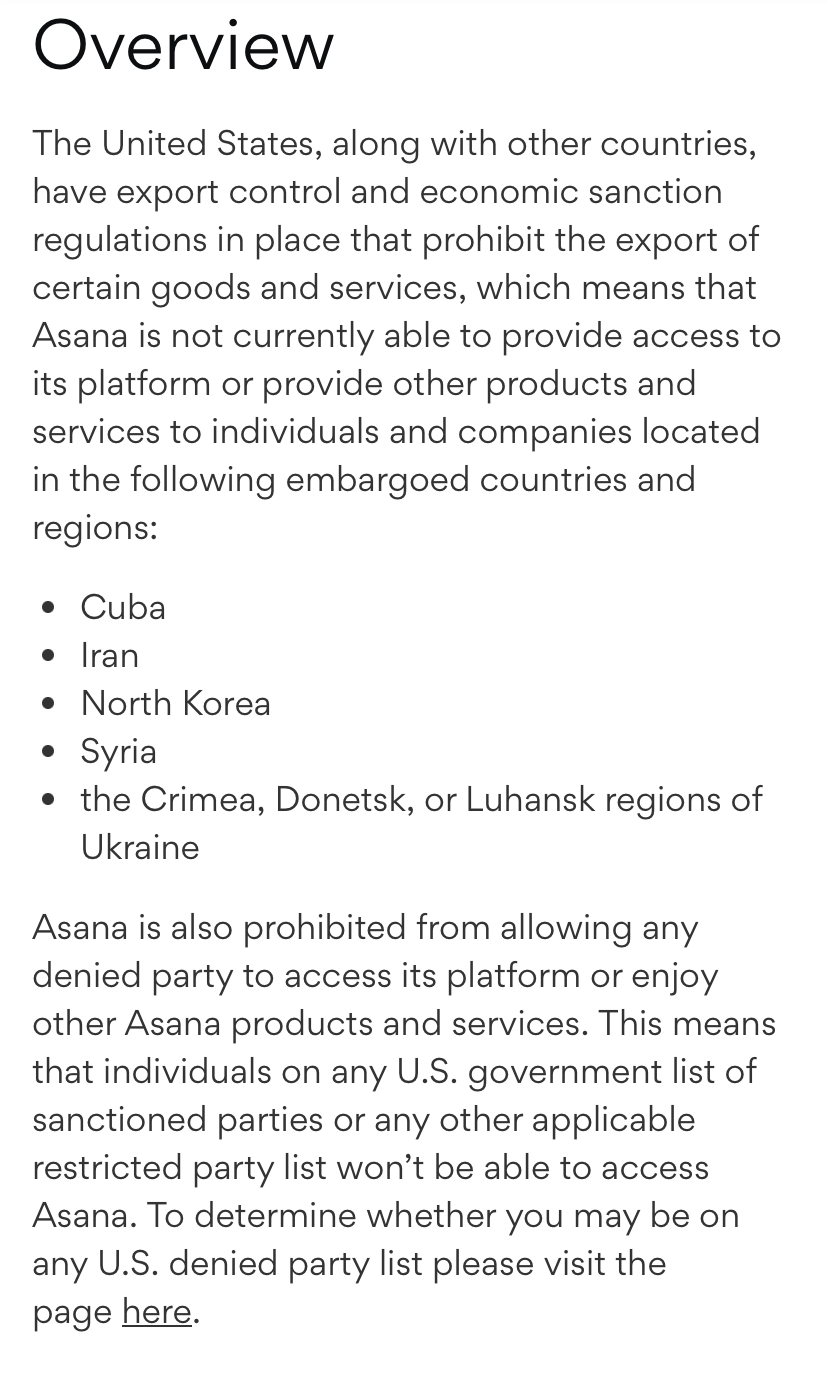
In their response, they also referred to the Global Trade Compliance Guide on the Asana website. It says that the business can’t provide access to its platform to individuals and companies located in Cuba, Iran, North Korea, Syria, Crimea, Donetsk or Luhansk regions of Ukraine.
However, russia is not in this list.
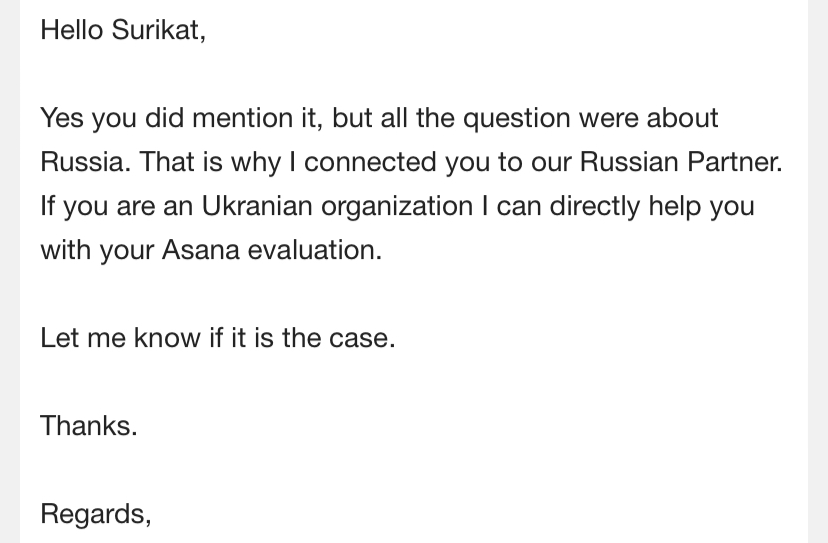
In addition, in its response, the support team said that Asana is not available in Russian language and has no dedicated Russian representatives. However, the Russian-language Asana page can be found on the first page of the search engine, and during the conversation with Trap Aggressor, the Asana representative wanted to redirect Trap Aggressor to a “Russian partner” because our questions were about Asana’s work in Russia.
We urge foreign companies not to do business in Russia because it’s literally bloody money. According to the LeaveRussia project of the Kyiv School of Economics, more than 1500 foreign companies have not left Russia yet.
Other Western companies still operating in Russia include BlaBlaCar, Notion, Alterra, Cloudflare, and Intel. StateWatch has also previously reported on Iridium, the US satellite communications operator that has not exited the Russian market.
Trap Aggressor is StateWatch’s investigative project tracking the real-world impact of sanctions and the confiscation of assets linked to Kremlin proxies. We believe confiscated assets should support Ukraine’s defense and reconstruction — and that their management must be transparent and effective.