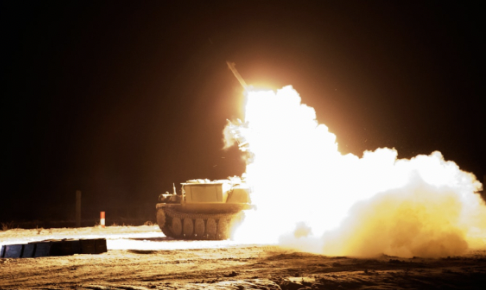

Russia continues to develop its military capabilities to seize new territories in Europe and beyond. In 2025, the Russian defense conglomerate Kalashnikov plans to increase the production of missile and artillery weapons by 60% compared to 2024 and by 170% compared to 2023.
Despite international sanctions aimed at restricting Russia’s military-industrial complex, the country has launched a new production cluster.
New Facilities and Production Expansion
According to the company, the increase in production became possible due to the commissioning of a modern manufacturing cluster, which created 700 new jobs. Additionally, the enterprise expanded its equipment fleet by 40%, significantly boosting the production of precision-guided munitions.
The new facilities will support the production of:
-
The Strela-10 surface-to-air guided missile for the Strela-10 air defense system;
-
The Vikhr-1 air-launched anti-tank guided missile;
-
The Kitolov-2 guided artillery shell and its modifications.
The company emphasizes that most of these munitions operate on a “fire-and-forget” principle, making them particularly effective on the battlefield.
“We are at the most crucial stage of our company’s development. We will continue to ramp up the production of high-demand products to strengthen the country’s defense capabilities,” said Alan Lushnikov, CEO of JSC Kalashnikov Concern.
The increase in Russia’s arms production is a warning sign for Ukraine’s Western partners regarding the need to tighten sanctions control, particularly on the supply of microelectronics and other critical technologies that can be used for military purposes.
Previous investigations by international organizations have repeatedly confirmed that Russian missiles and precision-guided munitions contain foreign-made components. Trap Aggressor has also systematically identified European and American-manufactured parts in Russian weapons, including in Shahed UAVs, which continue to attack Ukrainian cities, infrastructure, and civilian facilities almost daily.