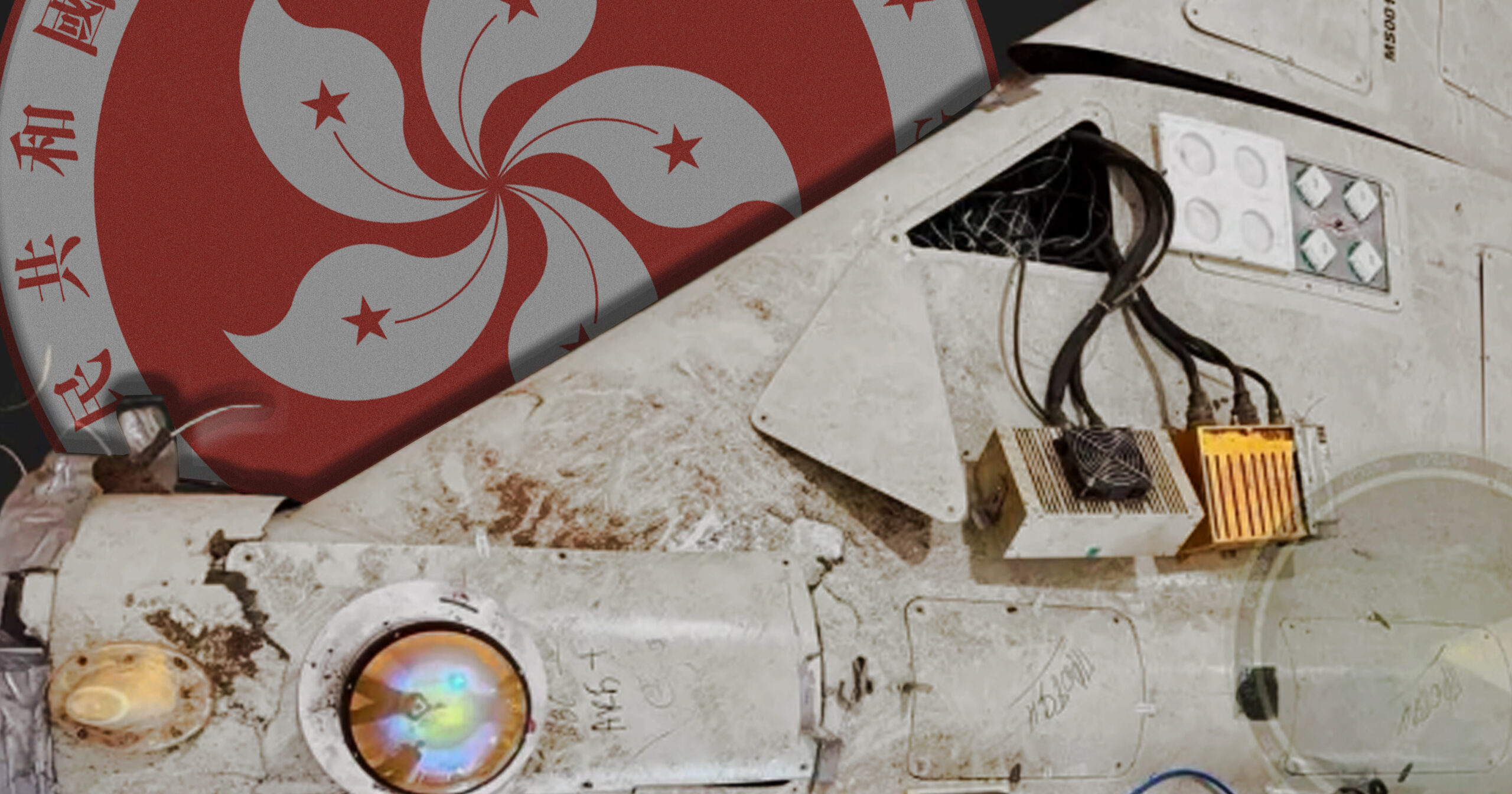

Through a series of Hong Kong trading and fictitious front companies, the Kremlin continues to receive European technologies predominantly used only in military systems. This conclusion was reached in the report “Bypassing the Blockade: How Hong Kong Feeds European Technology Into Russia’s War in Ukraine,” published by the Committee for Freedom in Hong Kong (CFHK Foundation).
Researchers analyzed Hong Kong and Russian customs data, company registries, and field reports from Ukrainian military personnel on components recovered from Russian weapons. The total documented value of supplies exceeds $200 million.
The report analyzed only so-called “high-priority” goods — those listed on the Common High Priority Items List (CHPL), which enumerates technologies most needed by Russia for its military operations in Ukraine — and only products from select European companies: 23 headquartered in Europe, plus 5 Polish subsidiaries of global manufacturers. These include Dutch firms Nexperia and NXP Semiconductors, French companies Thales and Michelin, German firms Infineon Technologies and Siemens, British firm Harwin, Swiss firm ST Microelectronics, and others.
The largest volume of supplies by value came from Swiss company STMicroelectronics. Customs documents from March 2022 through February 2024 show over 7,600 shipments through Hong Kong to Russia totaling $80.2 million. The vast majority of products were manufactured not in Europe but at STMicroelectronics facilities in Malaysia, China, and Morocco — significantly complicating their tracking under existing export restrictions. A similar situation applies to products from other European companies.
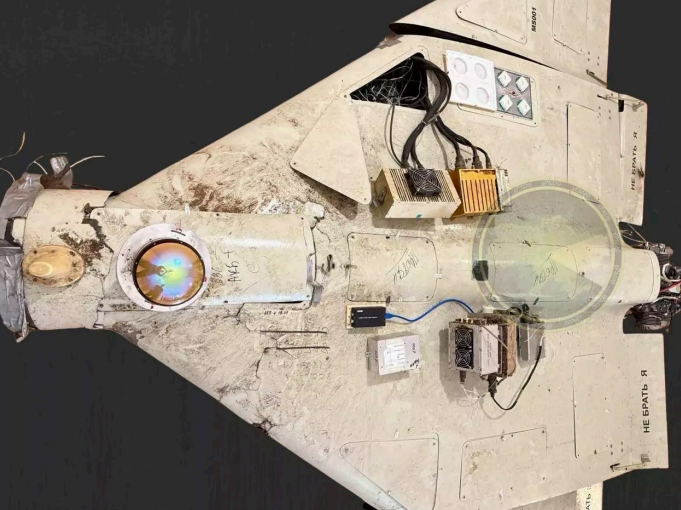
Dutch semiconductor manufacturers Nexperia and NXP Semiconductors have been found in cruise missiles, drones, electronic warfare systems, and fire control devices. In particular, an NXP microcontroller was found in the Korean KN-24 ballistic missile used by Russia. Customs records show 5,363 and 3,957 cargo shipments through Hong Kong totaling $12.4 million and $26.2 million respectively.
Non-Random Traders
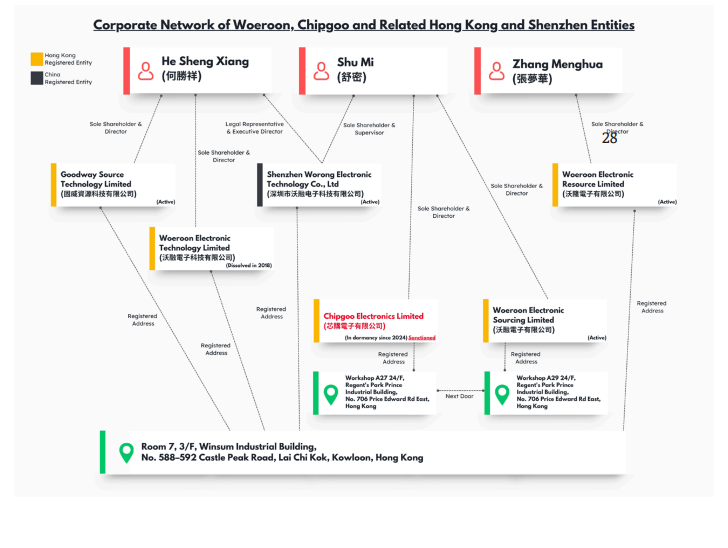
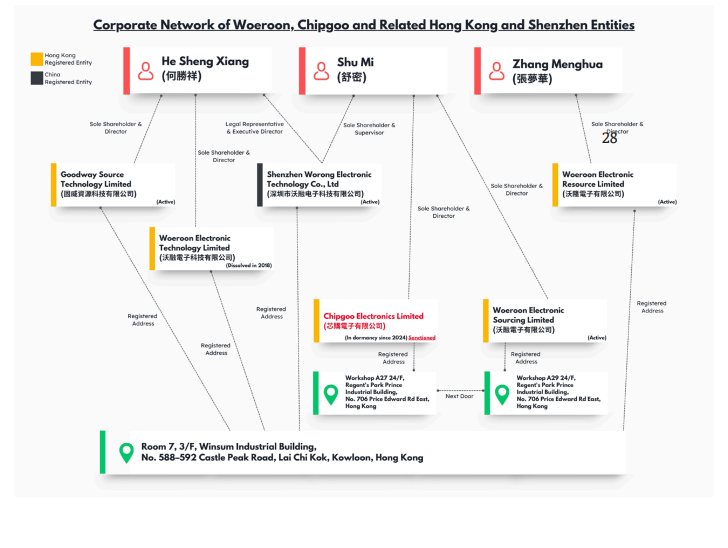
The most active player is Woeroon Electronic Sourcing Ltd. and its affiliated Shenzhen Woeroon. Between 2022 and 2024, they accounted for over 25,000 shipments to Russia totaling $27.9 million (not limited to products from the analyzed companies). Woeroon appears as one of the top five suppliers for 18 of the 28 analyzed manufacturers. Yet no jurisdiction — neither the EU, the UK, the US, nor Switzerland — has imposed sanctions on the firm. The company operates through a network of legally separate but operationally connected companies sharing common addresses and directors.
Second place goes to YW NL E-Commerce Company — over 22,000 shipments totaling $18.8 million. The company advertises specific European semiconductor brands on its websites, including Russian-language versions. Currently, YW NL is sanctioned only by the United Kingdom.
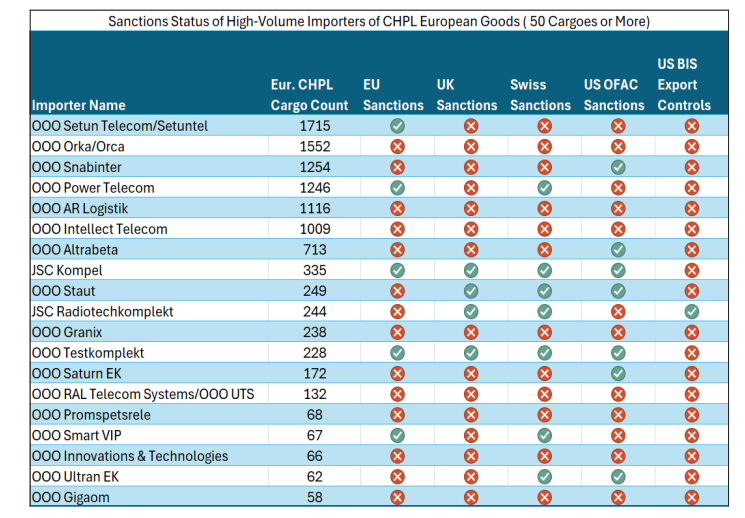
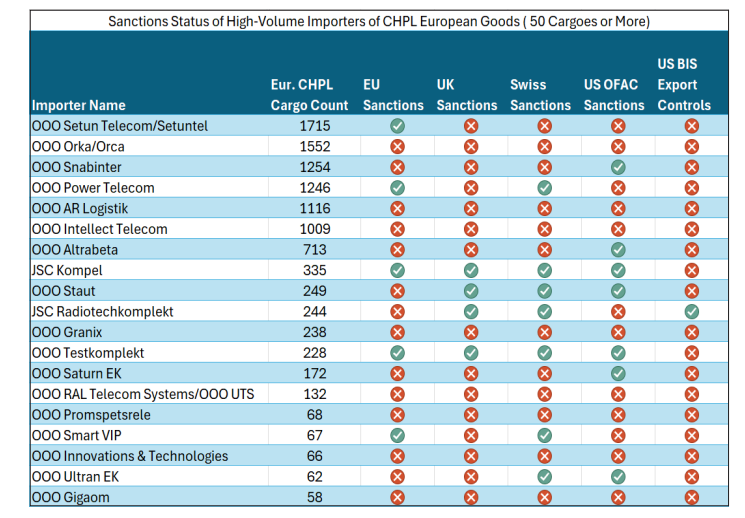
On the Russian side, the situation is analogous — the bulk of all products is received by a small number of Russian legal entities, most of which are also currently not under sanctions. These are LLC Saturn Telecom, Orca, Snabinter, Power Telecom, and AR Logistik.