
In a European city that annually celebrates NATO’s achievements, the trade in components for Russian missiles is also thriving. Here, a Russian family-run company managed to supply $22 million worth of critical materials to JSC Ruspolymet over three years of war. The Trap Aggressor media project from the StateWatch think-tank has obtained documents revealing the story behind an international fraud case.
Ostrava. The third largest Czech city, located 15 km from Poland and 55 km from Slovakia. Before the collapse of Czechoslovakia, the city was called the “steel heart” of the country — it was the main metallurgical center of the state. Over time, this has changed. Since 2001, the city has hosted the annual NATO Days and Czech Air Force Days — the largest security exhibition in the country. Each year, the Czech Republic and its NATO allies showcase their military technologies to the public. Over the decades, this has fostered a local ecosystem tied partly to military and metallurgical activity.
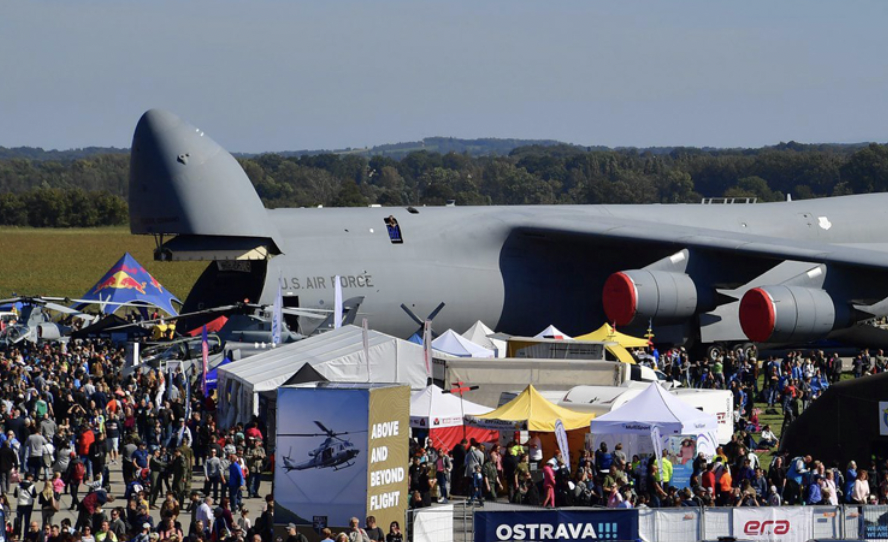
As a result, entrepreneurs dealing in materials critical to the aviation industry have also established themselves in the city. But it’s not just Czech business owners — Russian nationals have quietly set up operations nearby as well. These businesses continue to trade with the Russian Federation, helping it bypass European sanctions and bolster its military capabilities.
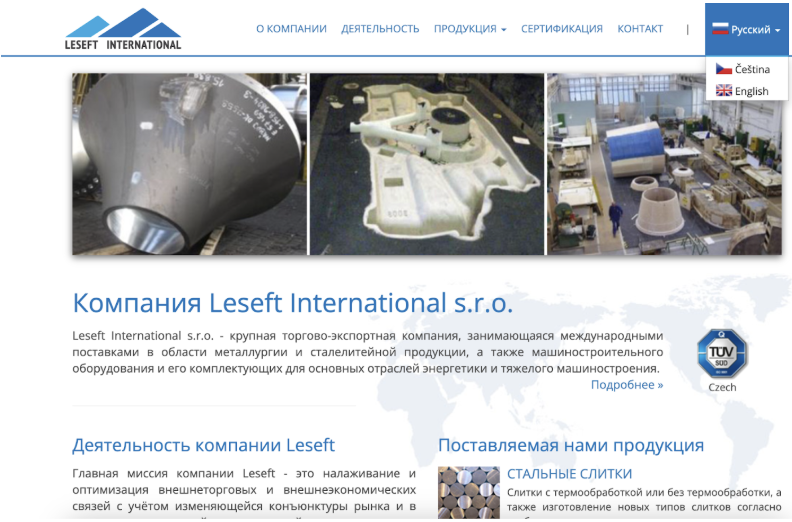
Leseft International s.r.o. is a Czech company based in Ostrava that presents itself as a major trading and export firm specializing in metallurgy and metal products. Its website is available in English, Czech, and Russian, reflecting its international reach. The company is led by Seferyan Lev Hovhannesovich, who was — or may still be — a Russian citizen. In addition to the Czech entity, he also heads a Russian entity with the same name.
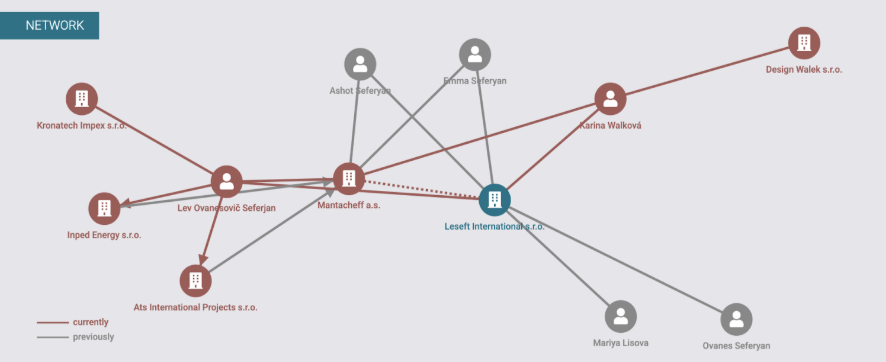
Moreover, the company appears to be family-run. The founder of the Russian LLC Leseft is reportedly Lev’s mother, Emma Seferyan. Listed among the management of the Czech branch are, presumably, Emma’s husband and Lev’s father, Hovhannes Seferyan, as well as what appears to be another son, Ashot.
The Czech Leseft International s.r.o. is an intermediary between the Russian JSC Ruspolymet and European companies for the unhindered supply of necessary products to the Russian Federation.
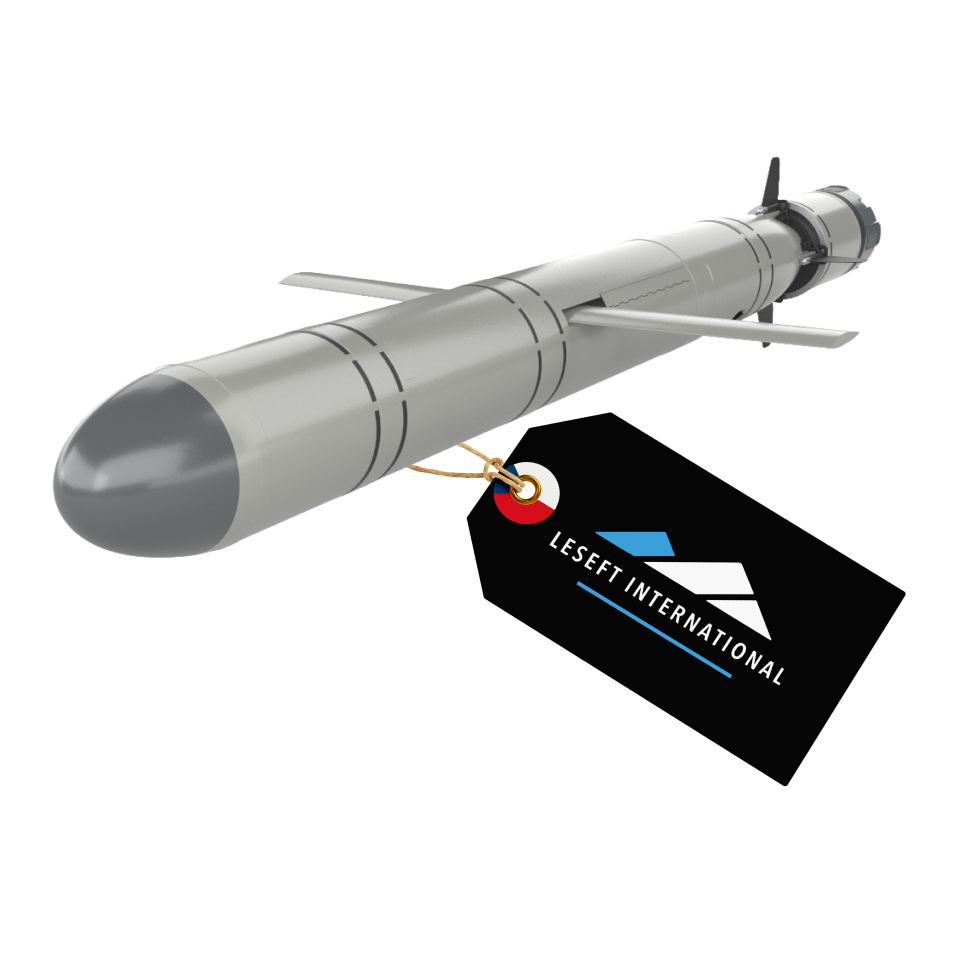
JSC Ruspolymet supplies components for the Kalibr and Iskander missiles, which daily terrorize the cities of Ukraine. For this, Ukraine imposed sanctions on the company and some of its subsidiaries. Trap Aggressor previously investigated the circumvention of sanctions by this Russian company.
Thus, some employees of the Czech company previously worked at Ruspolymet. The Czech company also passed the audit of JSC Atomstroyexport, which allowed it to become a direct supplier to Rosatom companies.
In addition to Leseft International s.r.o., Lev also oversees several other Czech companies. Notably, he owns Mantacheff a.s. A similarly named entity, Mantacheff a.s. Astana Limited, was registered in Kazakhstan, but on February 6, 2024, it was renamed Marco Holding Limited. Since March 2025, the company has been headed by Almagambetov Ernuar Maratuly, who appears to have registered only in June 2022 as a sole proprietor engaged in the trade of fruits and vegetables, according to the Kazakh business register. He is likely serving as a front for the Kazakh branch of the Czech company. A Leseft promotional booklet even states that the company holds accounts in a Kazakh bank.

Another company under the leadership of Lev is Kronatech Impex s.r.o., whose directors are Ukrainians Oleh and Oksana Yarovs. The company’s website states that “Kronatech impex sro is a division of Leseft International sro…”. The Yarovs head ARATTA INVEST LLC in Ukraine, which manufactures forgings on presses and hammers. It appears that all these companies are partners.
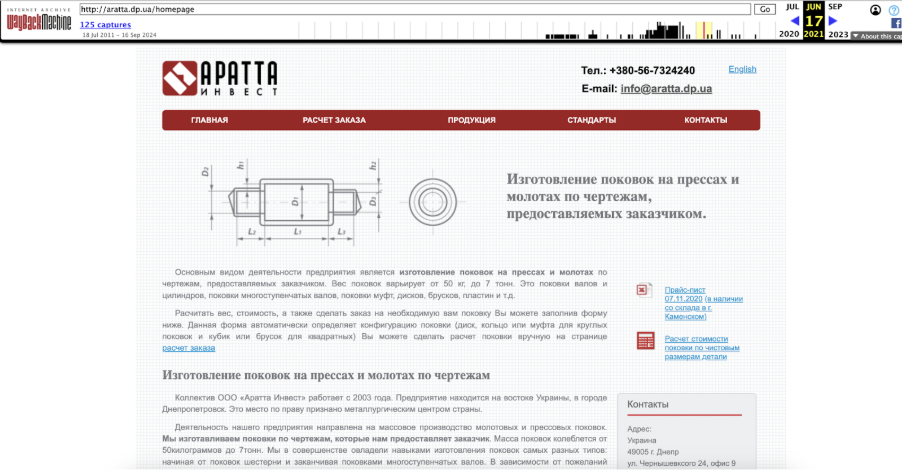
Customs records obtained by Trap Aggressor show that during the full-scale invasion, all of accessed ARATTA INVEST’s exports were directed to two Czech companies: Leseft International s.r.o. and Kronatech Impex s.r.o.
We asked the Ukrainian company whether it knew about the supplies from Leseft International products to the Russian Federation, in particular to Ruspolymet JSC, which is connected with the Russian military-industrial complex. The co-owner Oleg Yarovy himself responded to our letter directly. He did not deny the cooperation with the Czech company. However, he added the following:
“ARATTA INVEST LLC does not have any information about the business relations between Leseft and Ruspolymet JSC. Regarding the change of the contractor, which would have Russian connections, we note that ARATTA INVEST LLC carries out its activities exclusively in the legal field, does not cooperate with enterprises of the aggressor country and does not have any business or financial ties with them. All our contracts are checked for compliance with current legislation, and their selection is based on the principles of transparency and responsibility. In the event of receiving confirmed information about contractors with Russian connections, ARATTA INVEST LLC will definitely stop any work with such contractors. So far, such situations have not arisen.”
It turns out that for all these years, the Ukrainian couple never had any opportunity to learn about their long-standing business partner Seferyan, his family, or the Czech company’s connection to supplying Russian military-industrial factories. Therefore, Trap Aggressor publishes information about these supplies with the sincere hope that Oleg Yarovy will keep his promise to stop cooperating with a company that trades with the Russian military-industrial complex.
Supplies without borders
According to customs data, during the full-scale invasion, the Czech Leseft ordered products to the Russian Federation, or rather exclusively for Ruspolymet, for the amount of more than $ 22 million. Some of these products were supplied in violation of European export restrictions. That is, the companies supplied their products to Ruspolymet, but it was Leseft that ordered the products. The main suppliers of products subject to European restrictions was the Turkish company Hps Muhendislik Makina Sanayi Ve Ticaret As. 99% of all its supplies were made to Ruspolymet itself through Leseft. In particular, the HS codes of supplies under restrictions were as follows:
- 41221 – hydraulic engines and motors, linear “cylinders”.
- 841950 – heat exchange units.
- 848180 – devices for pipes, boiler shells, tanks, vats, etc.
- 848140 – valves for pipes, boiler shells, tanks, vats, etc.
- 850440 – static converters.
- 853650 – electrical switches for voltages not exceeding 1000 V.
Thus, products subject to sanctions in Europe were transported to the Russian Federation from Turkey; however, this process was managed by a company from the EU.
Through Leseft, various products were supplied to Ruspolymet not only by Turkish, but also by European and Chinese companies. For example, ENCE GmbH is a Swiss metallurgical and engineering company that also has representative offices in Korea (BK AMSOL CO., LTD.), Spain, France, Turkmenistan, and the UAE (Triven L.L.C-FZ). The company produces industrial equipment for the energy, chemical and metallurgical industries: heat exchangers, pumps, furnaces, uninterruptible power supplies, refractory materials, and technological installations. The representative offices LLC ENCE GmbH are also registered in the Russian Federation – in Moscow, Tatarstan, and the Sverdlovsk region. The company’s director is Dmitriy Olegovich Ivanov, a citizen of Cyprus and supposedly Switzerland. The company also has a representative office in Uzbekistan and supplies modern technological equipment to its chemical industry enterprises.
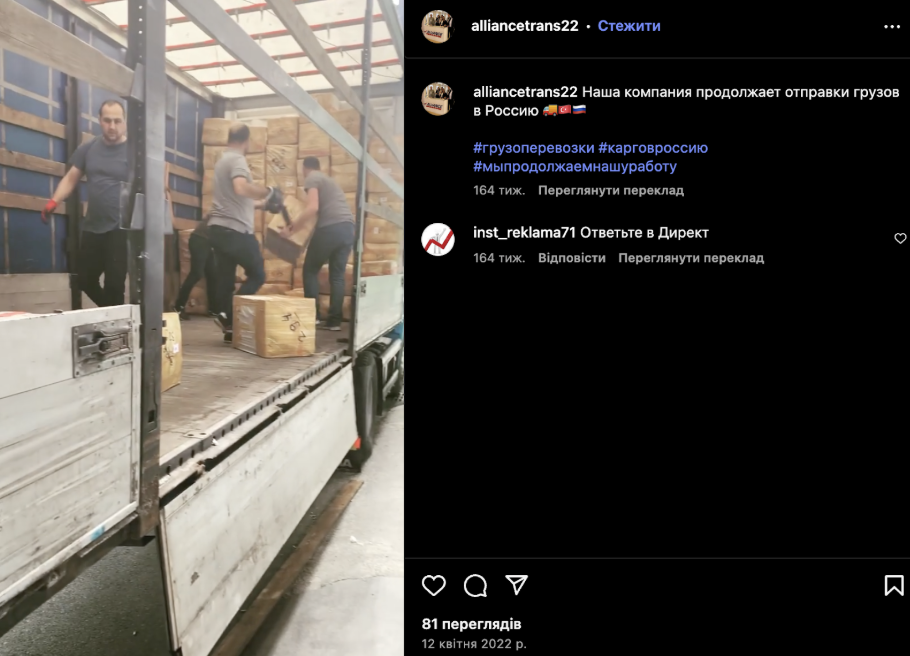
Another supplier through Leseft was the Turkish company Alliance trans, founded in Istanbul in 2010 with the support of the Moscow company Avia-Invest. The company still provides simplified customs services between Turkey and Russia.
The German metallurgical company SMS group GmbH, which maintains operations in the Russian Federation despite claiming to have exited the market, continues to export goods to Russia via Leseft.
When asked by Trap Aggressor, the company stated that the last shipment was made on the eve of the full-scale invasion and that the Russian company’s operations were reduced. However, not entirely shut down.
While European and Turkish companies are transporting sanctioned products to Ruspolymet, it supplies manufacturing parts for factories producing missiles that target Ukrainian cities daily. Dozens of European companies still maintain representative offices in Russia, supplying equipment, technologies, and materials there. And this is not just economic cooperation, it is an almost direct contribution to the war. As long as such ties remain, sanctions will carry a more declarative nature than be a real deterrent to the aggressor.
Trap Aggressor contacted the Czech Leseft International s.r.o. for comment, but did not receive a response. As well as responses from the Ostrava City Council and other companies mentioned in the article.
The investigation was prepared in collaboration with Vojtech Bogac, a journalist from the Czech outlet Voxpot.