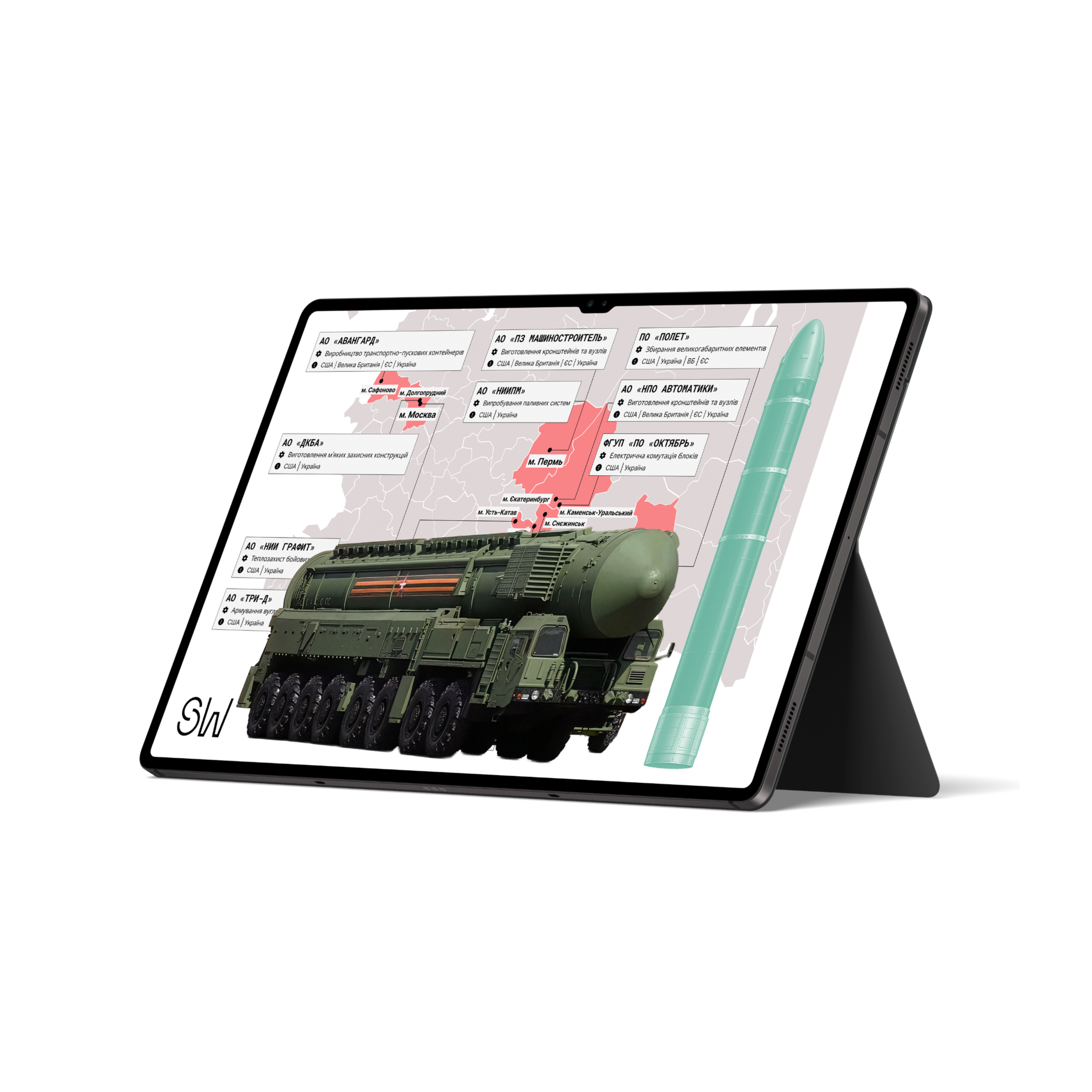




While Vladimir Putin once again promises to put the RS-28 “Sarmat” intercontinental ballistic missile on combat duty, dozens of Russian enterprises continue working on its production. Documents obtained by partners of the StateWatch Think Tank have revealed an extensive network of companies involved in creating one of the key elements of Russia’s nuclear arsenal. Some of them are still not under EU or US sanctions.
Key Findings:
- Documents obtained by partners of the StateWatch Think Tank indicate that dozens of enterprises from Russia’s rocket, space, chemical, and nuclear industries are involved in the production of the RS-28 “Sarmat” intercontinental ballistic missile.
- The contract alone between JSC Krasmash and FKE Perm Powder Plant for the production of Sarmat components in 2025 exceeds 956 million rubles ($12.7 million USD).
- Some of the companies involved in producing one of the main instruments of Russian nuclear blackmail are still absent from EU and US sanctions lists.
Not Just Krasmash
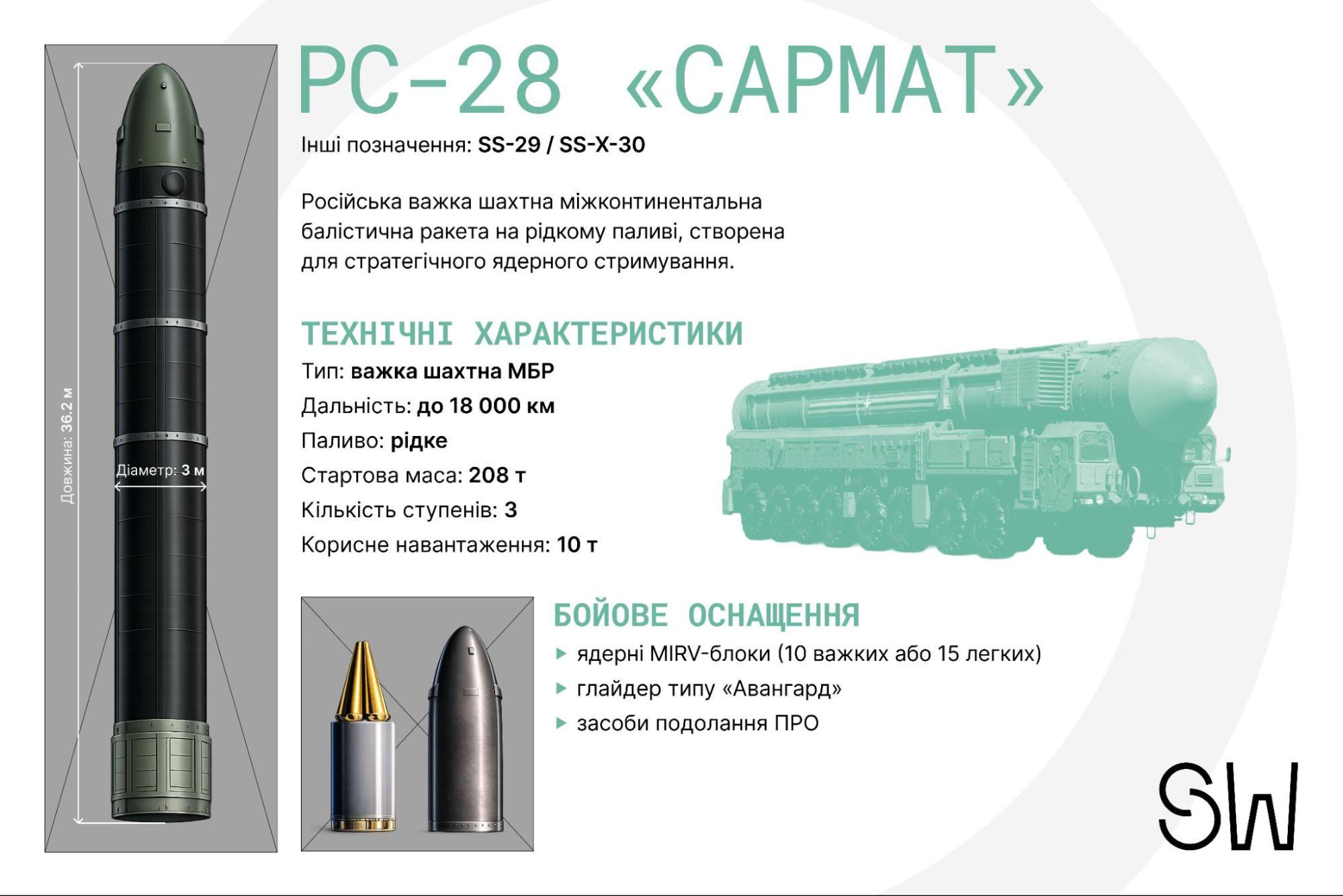
Open sources typically mention only a handful of participants in the Sarmat program: the Makeyev State Rocket Center, which developed the system; the Krasnoyarsk Machine-Building Plant (JSC Krasmash), where the missiles are manufactured; and the company Proton-PM, which produces the engines. All of them are part of the Russian state corporation Roscosmos.
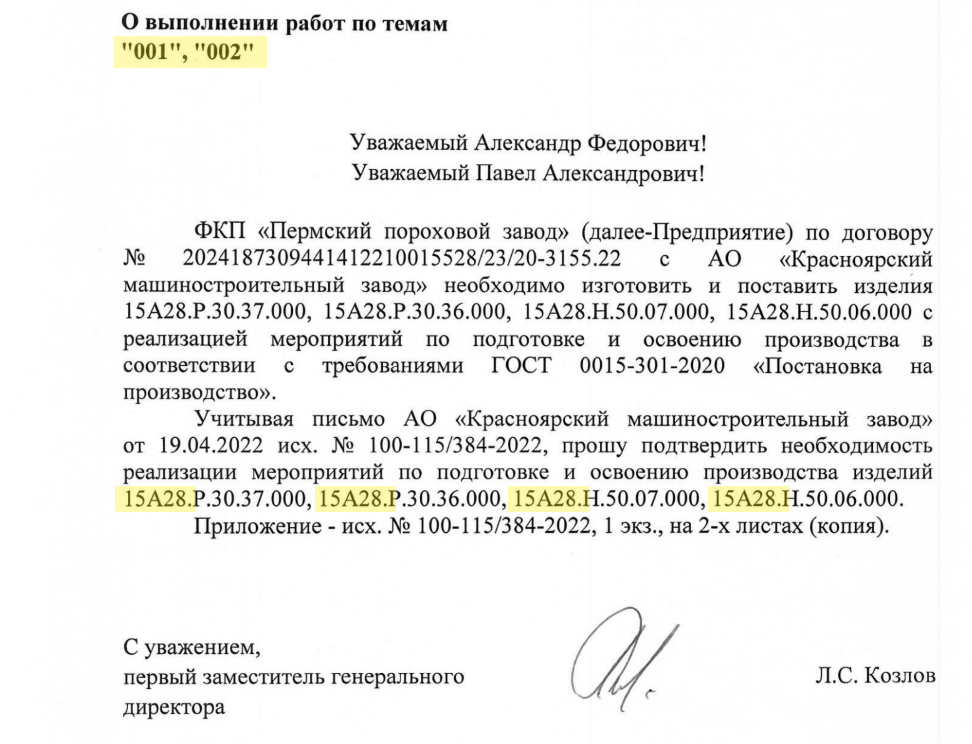
However, the documents obtained show that missile production relies on a far broader network of enterprises spanning Russia’s rocket, space, chemical, and nuclear sectors. In internal documents, the missile is referenced under the index 15A28.
Among the documents in the editorial team’s possession is correspondence between Krasmash and the Perm Powder Plant. The documents confirm that the two enterprises are jointly working on the Sarmat project under internal programs called “Topic 001” and “Topic 002”.
Journalists also uncovered a contract between the companies specifying that in 2025, the Perm Powder Plant was to manufacture components for the Sarmat system across four different product categories. The total contract value exceeds 956 million rubles including VAT, or approximately $12.7 million USD.
Internal presentations from the plant also show how the war against Ukraine has affected its financial performance. In 2022, the plant’s revenue stood at 7.7 billion rubles; by 2024, it had grown to 22.6 billion rubles. The share of military output exceeded 95%.

Production Spread Across Russia
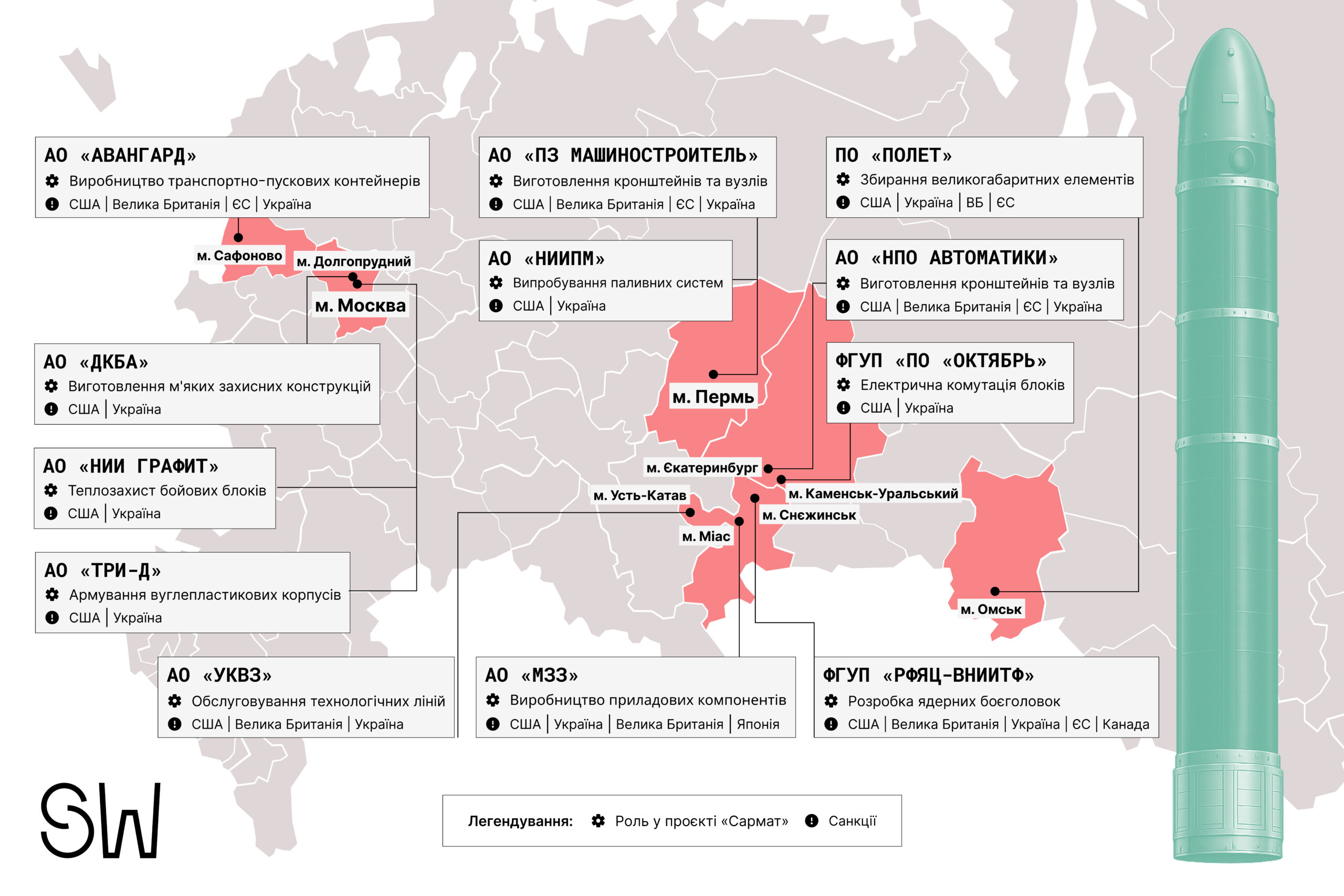
The documents show that enterprises from the Moscow, Perm, Chelyabinsk, Sverdlovsk, and Omsk regions are involved in manufacturing individual Sarmat components. Among the identified participants in the production network:
- JSC PZ Mashinostroitel
- JSC Avangard
- JSC NIIPM
- JSC MMZ
- JSC NPO Avtomatiki
- JSC NII Grafit
- JSC Ust-Katav Wagon-Building Plant
- FSUE RFNC-VNIITF
- PO Polyot
- FSUE PO Oktyabr
- JSC TRI-D
- JSC DKBA
These enterprises manufacture containers, missile assemblies, control systems, igniters, composite materials, radio-electronic components, and other parts required for production of the system.
Particular attention is drawn to the participation of FSUE RFNC-VNIITF – one of Russia’s primary nuclear warhead development centers. This center is responsible for creating more than half of Russia’s nuclear arsenal.
Not All Under Sanctions
Most of the identified enterprises are linked to the state corporations Roscosmos, Rostec, Rosatom, and Tactical Missiles Corporation, which are already subject to international restrictions. However, some individual companies involved in Sarmat production are still absent from European Union and United States sanctions lists.
This means that enterprises participating in the production of one of the main instruments of Russian nuclear blackmail continue to operate without full sanctions pressure.
As the documents make clear, behind this missile stands not a single factory or design bureau, but a large-scale network of enterprises from the rocket, space, chemical, and nuclear industries. It is precisely this cooperative network that ensures the production of one of the key elements of Russia’s strategic arsenal – one the Kremlin regularly uses to threaten Ukraine, Europe, and the world.
This material was prepared as part of a cooperation between the StateWatch Think Tank and UNITED24 Media.
This material was produced with the support of the International Renaissance Foundation. The material represents the views of the authors and does not necessarily reflect the position of the International Renaissance Foundation.