Anna Holishevska
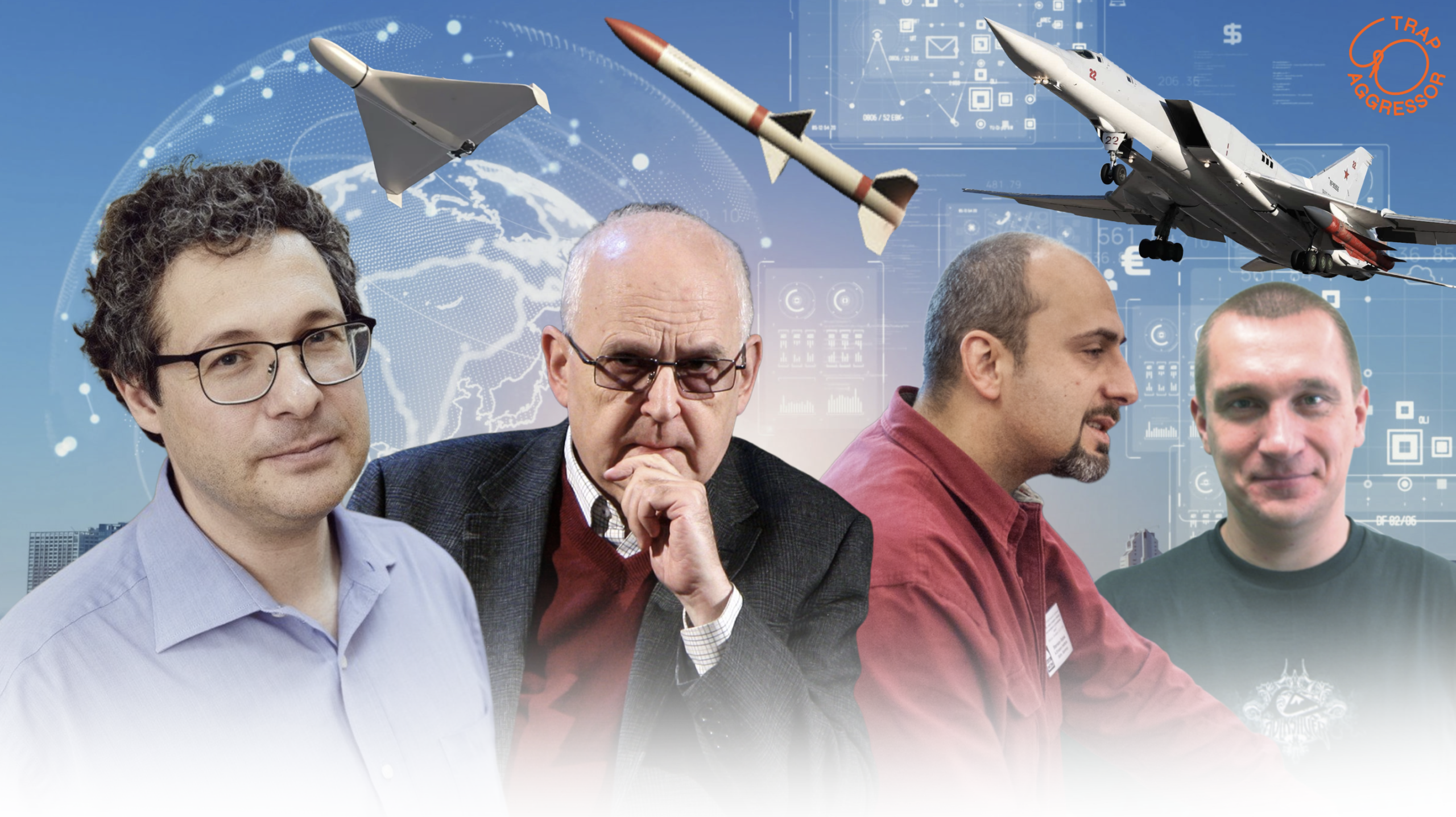
In the last two years of the full-scale invasion of Russia into Ukraine, the aggressor state has significantly increased its potential in producing weaponry. For example, Russian already produces its own new drones, which are more dangerous than Iranian shaheds, and missiles. Local scientists, who have been actively involved into the development of the Russian military and industrial complex since the soviet time, play the key role in production of new weapons.
Apart from being involved into the Russian Military and Industrial Complex, Russian scientists expose another threat for the civilized society. Recently, a professor of the Estonian university was accused of espionage and arrested. This is Viacheslav Morozov, a citizen of the Russian Federation, who worked as a professor at the University of Tartu, but previously had taught at a higher education institution in Saint Petersburg. Representatives of the local police say that Mr. Morozov shared information with Russian intelligence services so that the latter could infiltrate into different life spheres of Estonia, including the scientific one.
Trap Aggressor team has found that the Russian scientists who work for the Russian military and industrial complex has been receiving financing from the United States and other foreign countries, being desired guests at various international conferences and seminars.
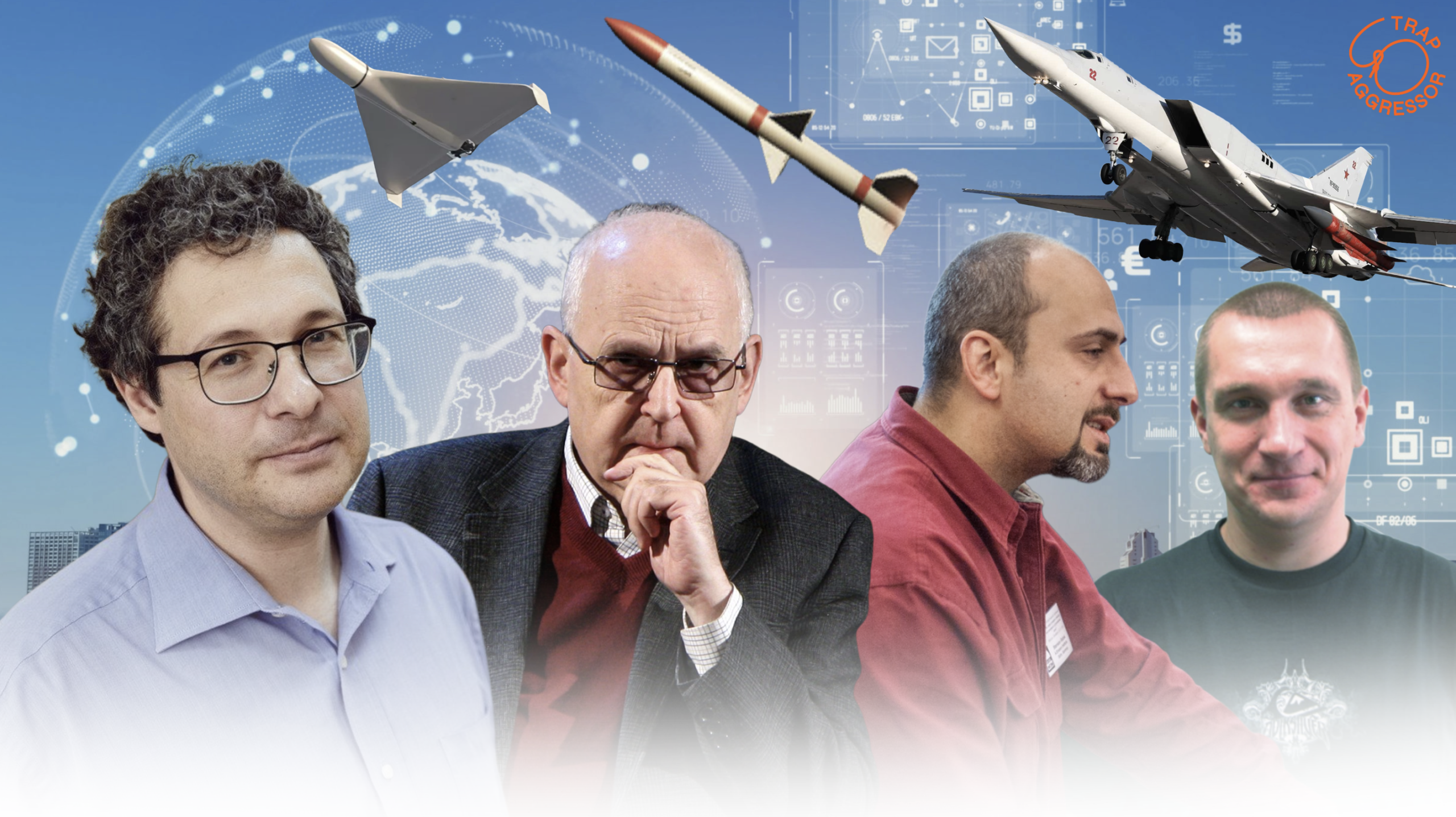
Representatives of Russian scientific institutions attend international scientific conferences, take part in research work. According to open sources, such events and research work in which Russian scientists are involved are financed by the U.S. National Science Foundation.
For example, the website MDPI (one of the largest publishers of scientific articles in the world in which Russian researchers have their works published) says that the U.S. National Science Foundation is one of their donors. Besides, it is sponsored also by a number of popular international institutions, among them the Natural Sciences and Engineering Research Council of Canada (NSERC), European Research Council (ERC), British National Institute for Health and Care Research (NIHR) and other institutions.
So, it is worth sharing about the Russian institutes whose employees continues growing in the scientific field due to the U.S. National Science Foundation.
For example, the Moscow Institute of Physics and Technology closely cooperates with the Military and Industrial Complex of the Russian Federation. It was the Moscow Institute of Physics and Technology which developed drone systems used by the Russian military and for what it was awarded by the Russian Ministry of Defence.
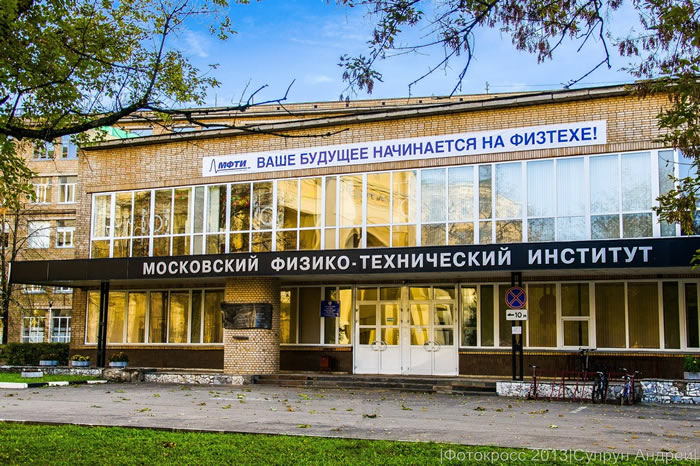
Besides, the institute includes a laboratory which supports the Russian military and space sector. The Moscow Institute of Physics and Technology is one of the Russian institutions which train professionals for the Russian defence and industrial complex, collaborating with the Russian defense research organization within different research projects. It is already under the sanctions of Ukraine, EU, Great Britain, USA, Canada, Switzerland, Japan, New Zealand.
It was this institute where a young and active scientist Nikita Kosogorov worked earlier. During the full-scale invasion (in the summer of 2022), this guy defended his dissertation and started working as a post-graduate student of the Californian Technical Institute. Today, during the full-scale invasion of Russia into Ukraine, Nikita takes part in international scientific research in physics relating to black holes. This is financed with large amounts of money – 9 and 14 million accordingly.
The Moscow Institute of Physics and Technology is where Yury Kovalyov continues working. At the same time, he is a senior research fellow at the Lebedev Physics Institute of the Russian Academy of Science. This scientist also finds time to teach at Max Planck Institute for Radio and Astronomy (Bonn, Germany). Besides, he takes part in scientific research on black holes, which is also financed with grants.
However, this is not all. The scientific director of the Astroparticle and Cosmology Laboratory (University Paris Cité) is a Russian Stanislav Babak. This scientist started working for the French university before the full-scale invasion. He is also a guest scientist of the said Moscow Institute of Physics and Technology, who continues to generate astronomical analytics internationally. In 2022, he took part in a research of gravitational waves which was allocated $17 million.
Earlier we mentioned the Lebedev Physics Institute at the Russian Academy of Science. In addition to Mr. Kovalyov, Sergey Panyukov continues winning laurels as a highly qualified senior research fellow. He has been engaged in scientific research in physics since the Soviet times. Today, he continues taking part in scientific international research on polymers. This research of the Russian scientist is financed on account of grant CHE-2116298 in the total amount of $20 million.
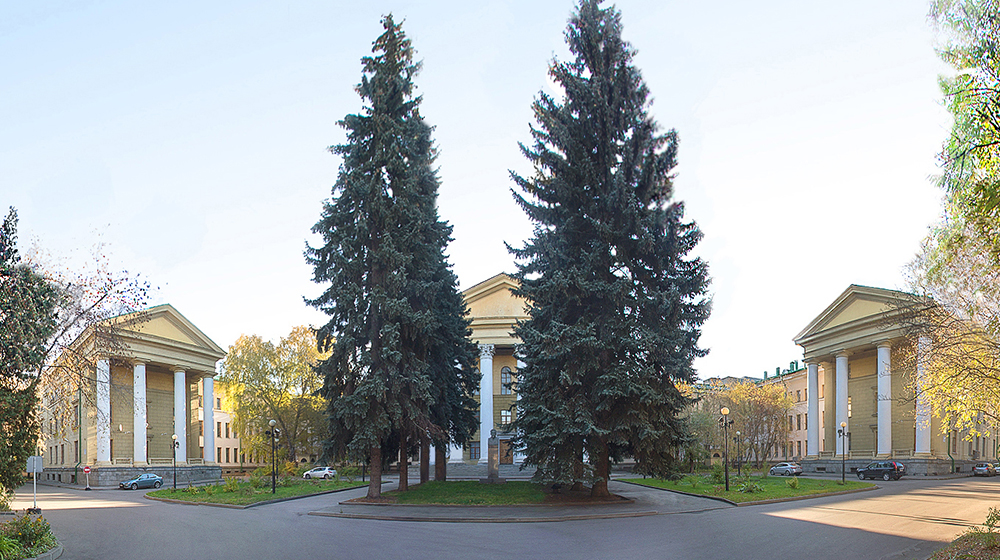
It is also worth mentioning the Landau Institute for Theoretical Physics at the Russian Academy of Sciences where Alexandr Korotkevich, a professor of the University of New Mexico, continues working. The scientist still has his works published in the leading scientific resources of the United States, takes part in scientific research on Stokes waves which is financed from the amount of $23 million.
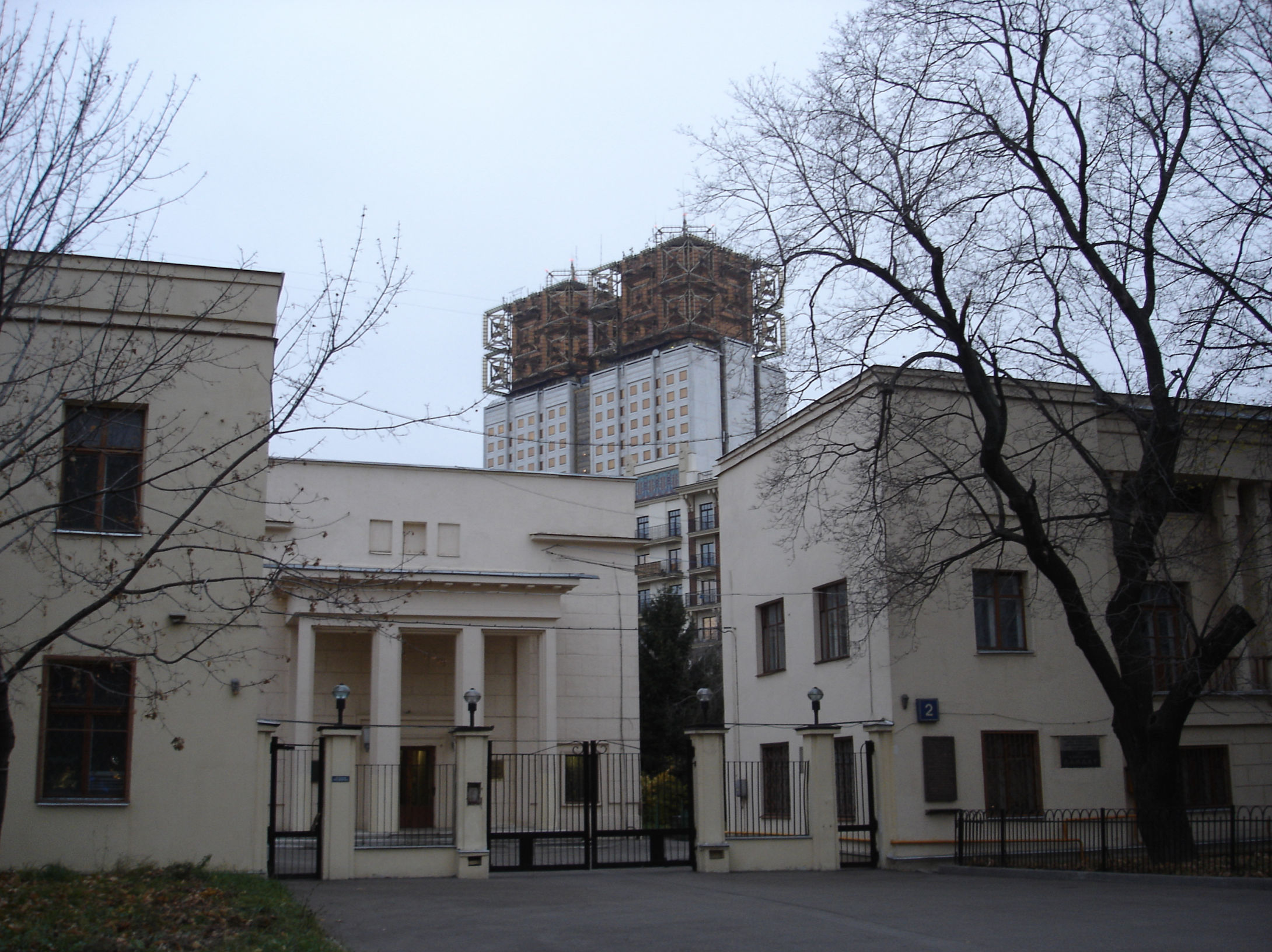
This is the Landau Institute for Theoretical Physics which has several research directions, including quantum calculations used in military technologies. It is under sanctions of Ukraine, USA, and Canada.
American financing is available also to Anton Andreev, a professor of the Washington University and Skolkovo Institute of Science and Technologies (Skoltekh), a research fellow of the Landau Institute for Theoretical Physics, who took part in two scientific research projects on effect of Josephson financed by a grant in the amount of $16 million.
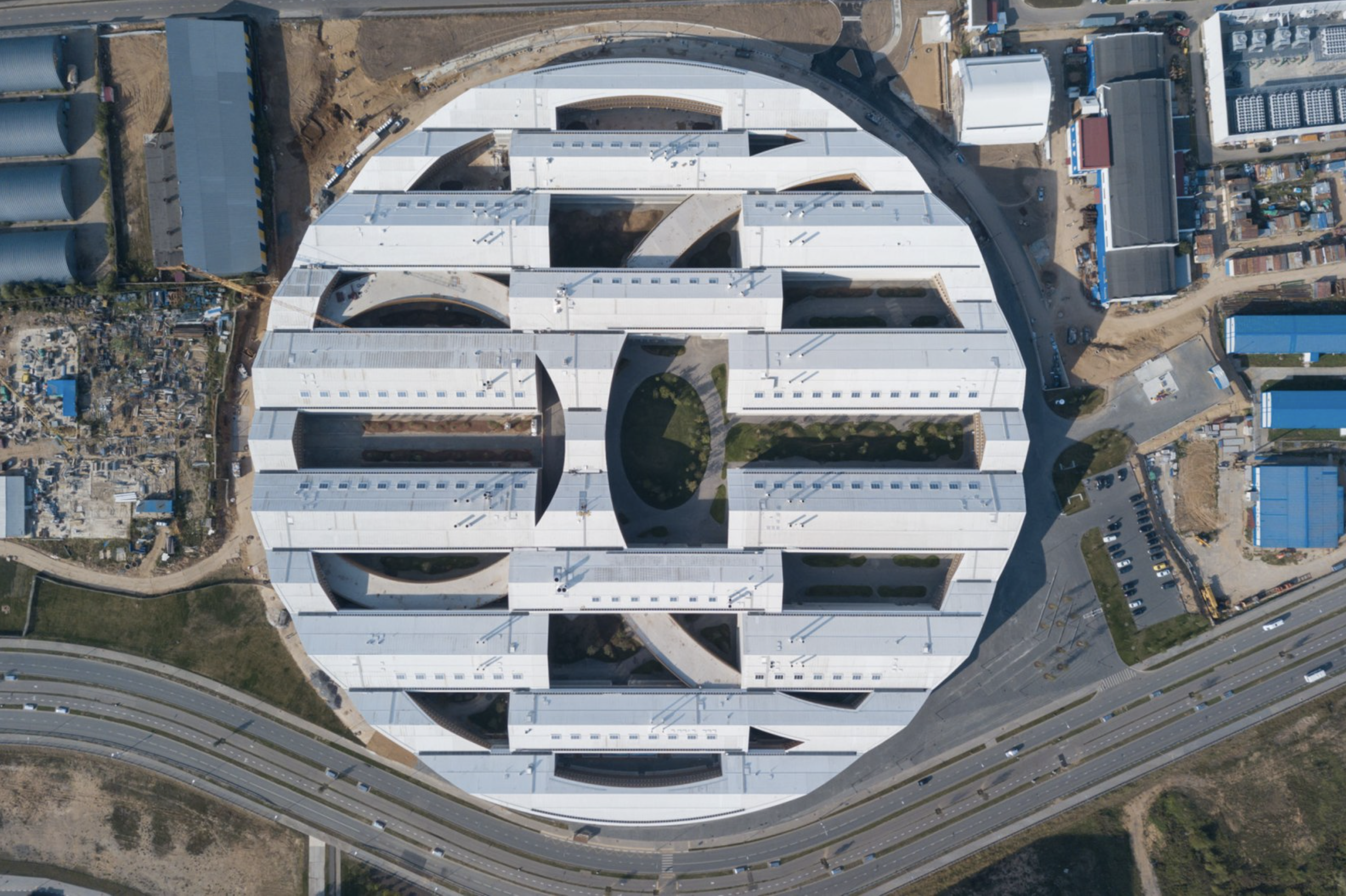
Skoltekh for which the scientist continues working is called a pioneer in the sphere of leading technologies. Its activities are aimed at the development of new technologies to solve critical problems the Russian Federation is facing. Skoltekh has been closely cooperating with the Russian military sector for the last decade.
The institute fund is sponsored by numerous sanctioned Russian arms and weapons manufacturers, including:
- Tactical Missiles Corporation JSC
- Uralvagonzavod (tanks producer)
- Mashynostroyenia Scientific and Production Association JSC (develops Russian missiles)
- United Aircraft Corporation (produces Russian combat aircraft)
- Concern Sozvezdie JSC (develops Radioelectronic warfare systems for the Russian Army)
- Almaz-Antey open JSC (produces Russian air-defence complexes)
- Moscow Institute of Thermal Technology Corporation JSC (produces Russian missiles)
Earlier, Skoltekh presented advanced robotic equipment in the main defence exhibition of the Russian Ministry of Defence. Currently, the institute is under sanctions of the United States, Switzerland, Australia and New Zealand.
The Institute of Information Transmission Problems at the Russian Academy of Sciences also receives its dividends in the world scientific field since one of the high-profile scientists on the list is Alexey Borodin, a professor of the Massachusetts Technological Institute and Research Fellow of the Russian Institute. The web site says that is a selected current member of the American Academy of Art and Sciences (one of the oldest scientific organizations in the Unites States). He takes part in a scientific research on Polymers finances due to a grant in the amount of $110 thousand.
This Russian institute where the scientist continues teaching conducts fundamental scientific research and applied developments in the field of transmission, dissemination and procession of information, and management within technical systems. The largest Russian and world companies and institutions, including the Russian Ministry of Defence, are often among its customers. The institute is currently under sanctions of Ukraine, United States, Switzerland, and Japan.
Two Russian scientists (Leonid Bork and Vladimir Smirnov) participate in a research on the Yang- Mills theory, which is financed with the amount of $225,000. The former works as a senior research fellow at the Alikhanov Institute of Theoretical and Experimental Physics which is currently under sanctions of Ukraine, USA, EU, Switzerland and Japan.
In 2022, after its restructuring, the institute became the Kurchatov Complex of Theoretical and Experimental Physics within the structure of the Kurchatov Institute Scientific and Research Center, which is under US sanctions for buying goods from the USA to support the Russian Army as well as for participating in the development of quantum calculations technologies which are used in malevolent cyber activities of Russia.
The Kurchatov Institute Scientific and Research Center is also a workplace of Yulia Fridman (research fellow) who took part in the scientific research of microbial communities (Fine-scale diversity of microbial communities due to satellite niches in boom and bust environments) financed with the amount of $16 million.
It is worth adding the Prokhorov General Physics Institute at the Russian Academy of Sciences to the aforementioned educational institutions. It is on the restrictive USA sanctions list introduced against enterprises which support the Russian defence sector. The research fellow of the Prokhorov General Physics Institute, Anatoly Zvezdin, took part in the scientific research of magnet optics which was financed with a grant in the amount of $485 thousand.
The Institute of Spectroscopy of the Russian Academy of Sciences which is involved into activities related to spectroscopy and its use to control technologies, nanotechnologies, facilitating the development of technical capabilities of the aggressor state is still a part of the international scientific community. The indicated scientific and research institutions being under sanctions of the United States, Canada and Ukraine, the chief of the Laboratory of Nanostructures Spectroscopy, Yury Lozovik, took part in a scientific research in physics (financed with $16 million).
We have sent a letter to the U.S. National Science Foundation to enquire why the international scientific community still invites Russian researchers to cooperate. The editorial board of Trap Aggressor has not received any answer yet.
However, one has to understand that, while working on complicated topics in physics, a number of Russian scientists continues working for institutions which have to do with the Russian Military and Industrial Complex. For this reason, it is necessary to outline specific measures which minimize penetration of Western funds into the Russian science and, therefore, development of weaponry for the aggressor state. For example:
- to impose sanctions on local educational institutions which work in the sphere of technologies
- to prohibit Russian scientists to attend international conferences, symposiums, scientific works and events; to boycott such events in Russia
- to prohibit the Russian scientific community to receive grants from international funds (including the U.S. National Science Foundation)
- to prohibit sanctioned Russians and organizations to sponsor international scientific events and projects
- to prohibit joint scientific research, articles and conferences with the Russians (to stop publishing their works in international scientific journals, on web sites and platforms)
- to limit access to international scientific resources and web sites (it also relates to data bases)
Modern war is a war of technologies which are developed by researchers, developers and scientists all over the world. In Russia, they develop Iskanders and shaheds which attack peaceful Ukrainian cities on a daily basis. Nevertheless, they continue receiving support from the West. Our team calls the world to more effectively sanction such persons and prohibit Russian scientists to take part in any international events. Although they do not hold arms in their hands, they use their knowledge and actions to help to continue the war. Therefore, none of them can be admitted to any scientific communities of any progressive country of the world.
This investigation was conducted as part of the project “Investigate Like OCCRP: Follow the Money and Solve War Crimes”, which is supported by a grant from the Open Society Foundation and organized by OCCRP and Slidstvo.info.