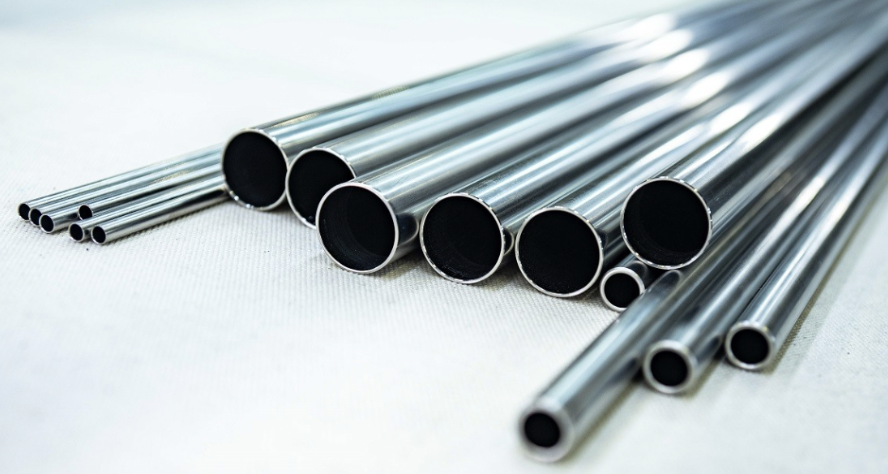


The world’s largest zirconium producer, which has nuclear weapons licenses and still evades sanctions, has begun producing critically important titanium tubes for the Russian aviation industry. These components were previously purchased from EU countries and will now become a key element of the import substitution program for Russian military aviation.
The Chepetsky Mechanical Plant (ChMZ) will now produce seven new types of titanium alloy tubes for aviation pipeline systems. Such tubes with a diameter of 6.35 mm to 31.75 mm and a wall thickness of 0.4 mm to 1.3 mm were previously purchased by the Russian aviation industry in the EU, according to local media. Testing of pipeline system assemblies manufactured using ChMZ products is currently underway.
The ChMZ plant is the world’s largest and the only producer of zirconium and its alloy in Russia. The plant is part of the TVEL concern, which belongs to the Rosatom state corporation. The enterprise processes ore with a high content of titanium (a metal used in the production of aircraft and missiles) and other rare metals. ChMZ products are actively used at Russian military-industrial complex plants that produce military aircraft and ships.
ChMZ’s new production program appeared just when Western sanctions began to seriously affect the Russian aviation industry. Without titanium pipes, it is impossible to establish hydraulic and fuel supply systems in modern combat aircraft. Previously, these critically important components were supplied by European manufacturers, but after the tightening of the sanctions regime, such supplies were stopped. Now the enterprise, which has licenses to work with nuclear weapons and avoids Western restrictions, is becoming a key link in the Russian import substitution program for military aviation.
“In recent years, the Russian aircraft manufacturing market has faced an urgent need to replace foreign components with domestically produced products. Among the key missing components were titanium pipes – an important element of the design of various aircraft systems. At the request of customers from aircraft manufacturing enterprises, a new specialized production of titanium pipes for aviation was created on the basis of ChMZ. In 2025, we plan to increase the supply of titanium pipes for aviation fourfold compared to 2023,” Andrei Andrianov, General Director of Rosatom MetallTech LLC, admitted in an interview.
ChMZ plans to produce about 100 km of titanium pipes for the hydraulic systems of domestic aircraft by 2030.
Previously, Trap Aggressor reported in its own investigation that the Rosatom division ChMZ successfully circumvents international sanctions through an extensive network of intermediaries, including the German company Hermith GmbH, headed by Russian-born Alexei Rasskazov, and the Turkish Ti̇tan 2 Ic İçtaş İnşaat Anoni̇m Şi̇rketi̇, which is actually a joint venture with the Russian concern. The company produces 70% of titanium welding wire in Russia and occupies 18% of the global market for zirconium rolled products. Since 2014, ChMZ has supplied products to Russian military enterprises, including Baltiyskiy Zavod Sudostroenie, Salyut, and the Prometheus Research Institute, which are directly related to the production of military equipment.
The absence of the enterprise and its management on the US and EU sanctions lists creates a significant gap in the system of international restrictions against the Russian military-industrial complex. Thanks to this, ChMZ not only continues to provide strategic raw materials to the Russian defense industry but also actively develops import substitution of critical components for military aviation that were previously purchased in Western countries, thereby reducing the effectiveness of sanctions pressure and supporting Russia’s ability to continue military aggression.