New structure of defence procurements
Recently, the whole process of non-lethal defence procurements – from the creation of requirements, specifications of goods, and determination of their value to selection of the supplier and conclusion of a contract – was conducted within the Ministry of Defence. The bulk of these functions was assigned to the Resource Department, which is now being liquidated.
Within the reform of the system of procurements for the Armed Forces of Ukraine, the Ministry of Defence of Ukraine presented a new model which included two directions of lethal and non-lethal procurements.
The new Department of Procurements Policy at the Ministry of Defence of Ukraine, which will develop normative acts and control activities of the two newly-established procurement agencies, is being created. In particular, non-lethal procurements of, for example, food products, fuel, uniforms and tactical medicine items will be handled by a new agency named the State Logistic Operator, which has been functioning since December 1, 2023. The function of procurements of weaponry and military equipment has been assigned to another agency at the Ministry of Defence named the Agency of Defence Procurements, which has been operating since June 2023.
At the leadership level of the MOD, three deputy ministers are currently responsible for procurement for the armed forces. Dmytro Klimenkov will control the formation of procurements policy. The newly-appointed Vitaliy Polovenko will be responsible for logistic support and coordinate the issue of priorities in non-lethal supplies for the Armed Forces of Ukraine. The Lieutenant Colonel Ivan Havryliuk will form the scope and list of items for procurements of weaponry and heavy equipment.
How will the DOT operate?
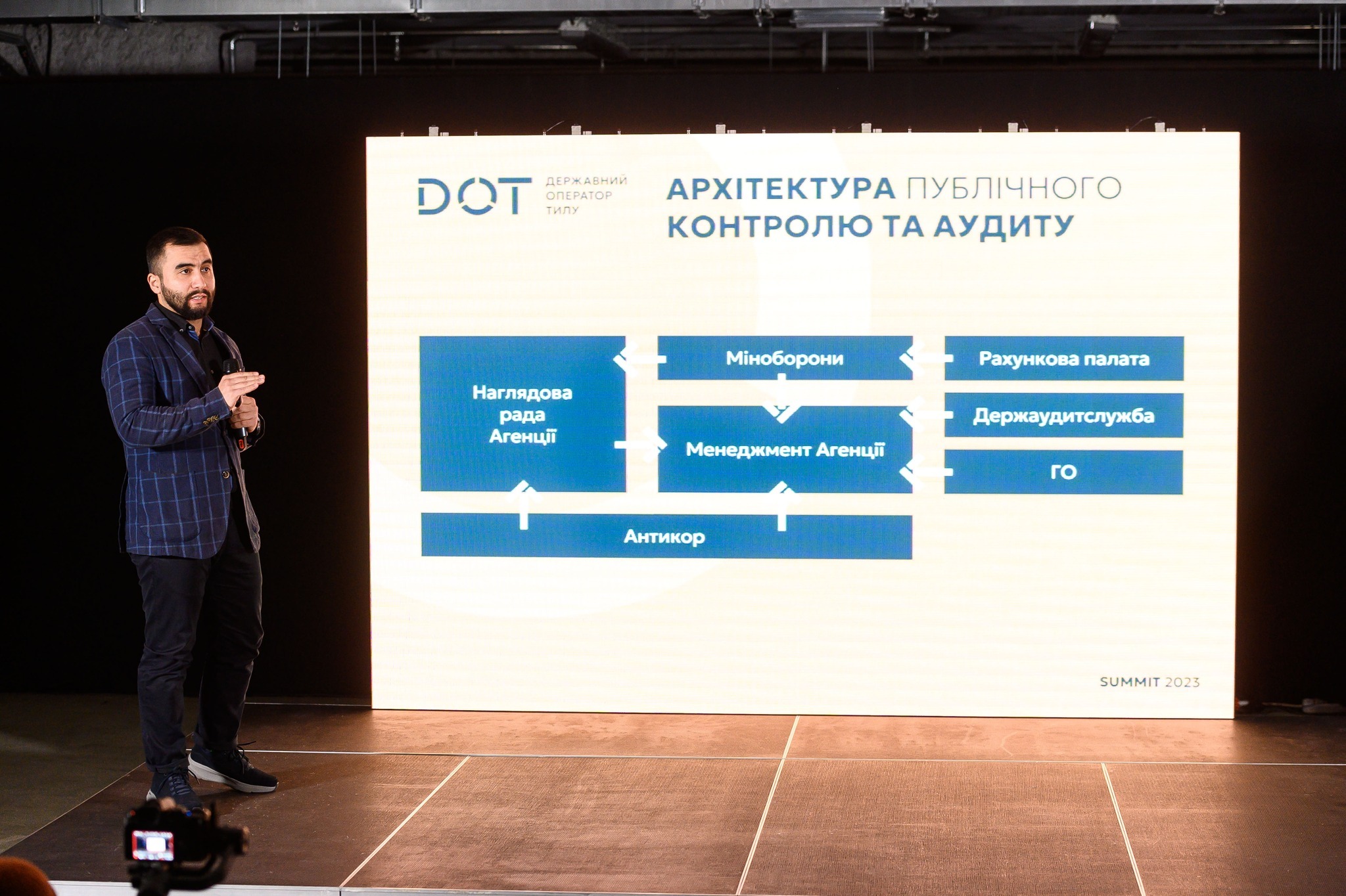
The agency named State Logistic Operator (DOT) has been empowered to procure all non-lethal goods ordered by the Armed Forces for the funds of the Ministry of Defence since December 1, 2023. From now on, the new company will buy military uniforms, food, fuel and lubricants, and tactical medicine goods (so far tourniquets only) for the servicemen. The DOT has already announced the first tenders in late December 2023, while the annual budget of the body will amount to about 95 billion UAH. The agency will report to the Ministry of Defence, and its activities will be monitored by the Supervisory Board, which will soon be established. As before, the Ministry of Defence (based on the data of the General Staff) will form the need in accordance with the Food Catalogue and send the request to the DOT.
Advantages of DOT approaches
Prior to the announcement of tenders, DOT will organize open consultations with market participants to familiarize themselves with the terms of the tender and conduct a market analysis to form discriminatory requirements for suppliers and the subject of procurement in the tender documentation. Consultations are announced publicly on social media and/or on the DOT website. In addition, mailings are carried out based on the contact database of suppliers and chambers of commerce and embassies (in the case of non-residents). At the same time, all suppliers selected in tenders will go through due diligence procedure conducted by the DOT into their capability to fulfil contractual terms which takes into account both the requirements of procurement legislation and the anti-corruption and sanctions compliance.
Food products will be procured based on a catalogue of 409 items in accordance with NATO standards. But the tender will not be announced in regard to the whole package of 409 items (as it was done earlier). This catalogue will be divided into more than 25 categories (for example, a separate tender for dairy products, a separate tender for meat products). At the same time, the first logistics tenders will be announced simultaneously with the goods in the first half of January. In the future, tenders for logistics will be announced first, and then for goods. It will enable the DOT to conclude direct contracts with manufacturers rather than do it through intermediaries. This, in turn, will significantly reinforce competition.
Services of supplying goods and shipping them to places where they are accepted by the Armed Forces of Ukraine have been assigned to different businesses. A supplier who wins a tender will supply its produce to distribution centers (exceptions are for bakery products, water, chicken, etc). Services to deliver the produce from these centers to final consumers, in turn, will be procured by the government separately. This will also boost the competition among producers of food products, which were earlier incapable of ensuring transportation of their goods.
The DOT will procure both goods and logistic services through the Prozorro electronic procurement system. Tender participants will have access to all information. However, only the price of procured goods will be available to the public. It will ensure security for tender participants amid the war and transparency of the very procedure.
While estimating an expected value, the DOT will consider an average market price and account for the data of the State Standards of Ukraine. There will be conducted no procurements at a price that is higher than the retail price.
The agency also analyzes tender documentation of participants, qualifies or disqualifies, and then selects the winner based on the principle of the most economically advantageous offer, compares applications and selects the winner based on the price-quality principle.
DOT checks the quality of the product before it is shipped to military units. The requirements for the supplier include the provision of documents that confirm the quality and safety of products. The agency experts carry out incoming control of products at the distribution center, in case of delivery of goods that do not meet the requirements specified in the contract, such goods will not be accepted at this stage. Periodic laboratory control of products has also been introduced. In the near future, the agency intends to start the practice of auditing suppliers for compliance with the food safety management system.
The Agency actively communicates with international partners such as EUACI and SADR, and recognized anti-corruption NGOs, which indicates openness to public scrutiny and the international community. Recruitment of DOT management and staff is conducted on the principles of integrity, transparency and competitiveness.
This material was developed under the UK Special Defence Advisor’s programme, funded from the British Government’s Integrated Security Fund (ISF) budget. The project delivery partners are EDGE-Alinea International and StateWatch.