Since the beginning of the full-scale invasion, the work of state-owned companies in Ukraine has changed, which has affected their financial results. Ukrainian think tank StateWatch has analysed the financial reports of state-owned companies that are managed by the Ministry of Communities, Territories and Infrastructure (Ministry of Reconstruction). Analysts have identified which state-owned enterprises were profitable and unprofitable in 2022-2023 and what influenced their financial results.
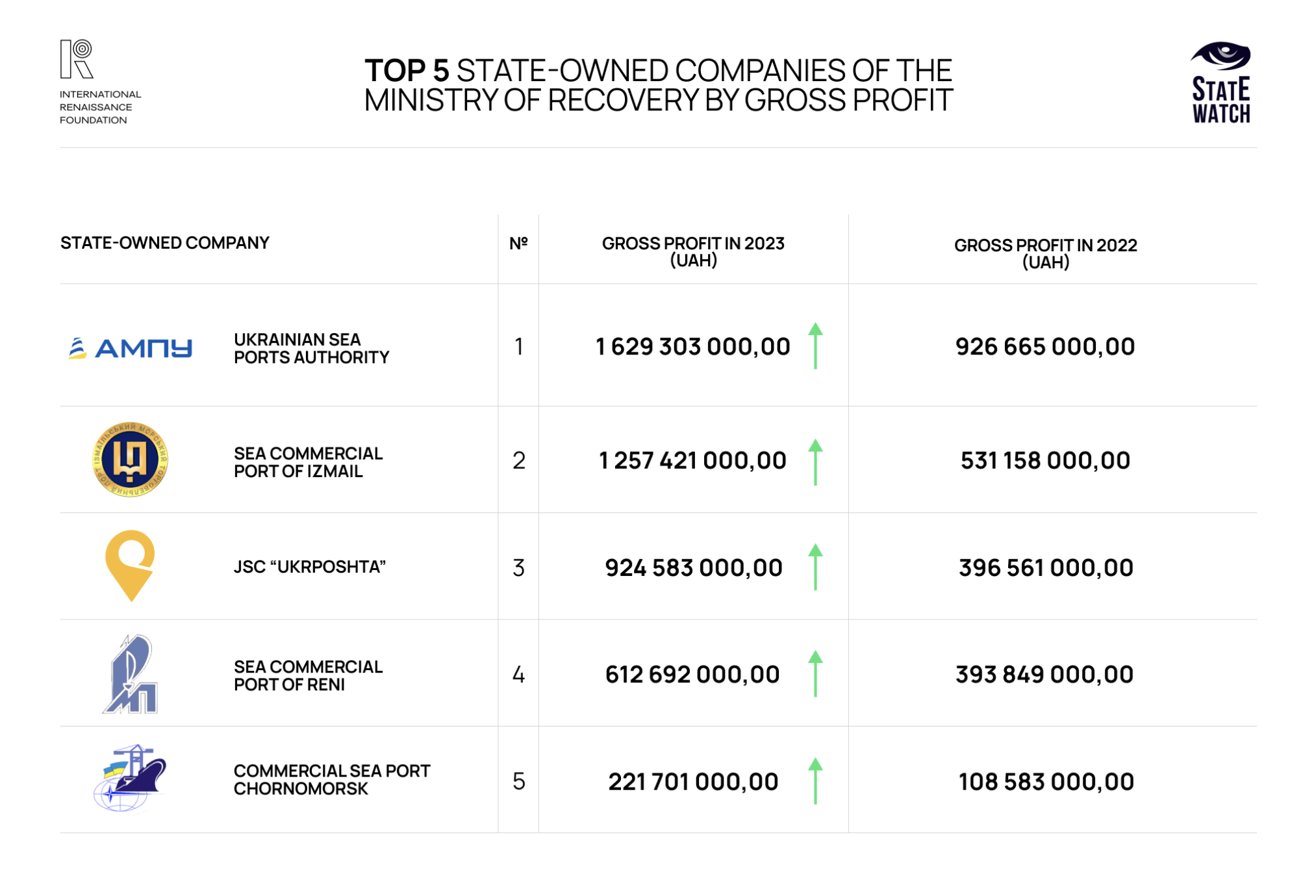
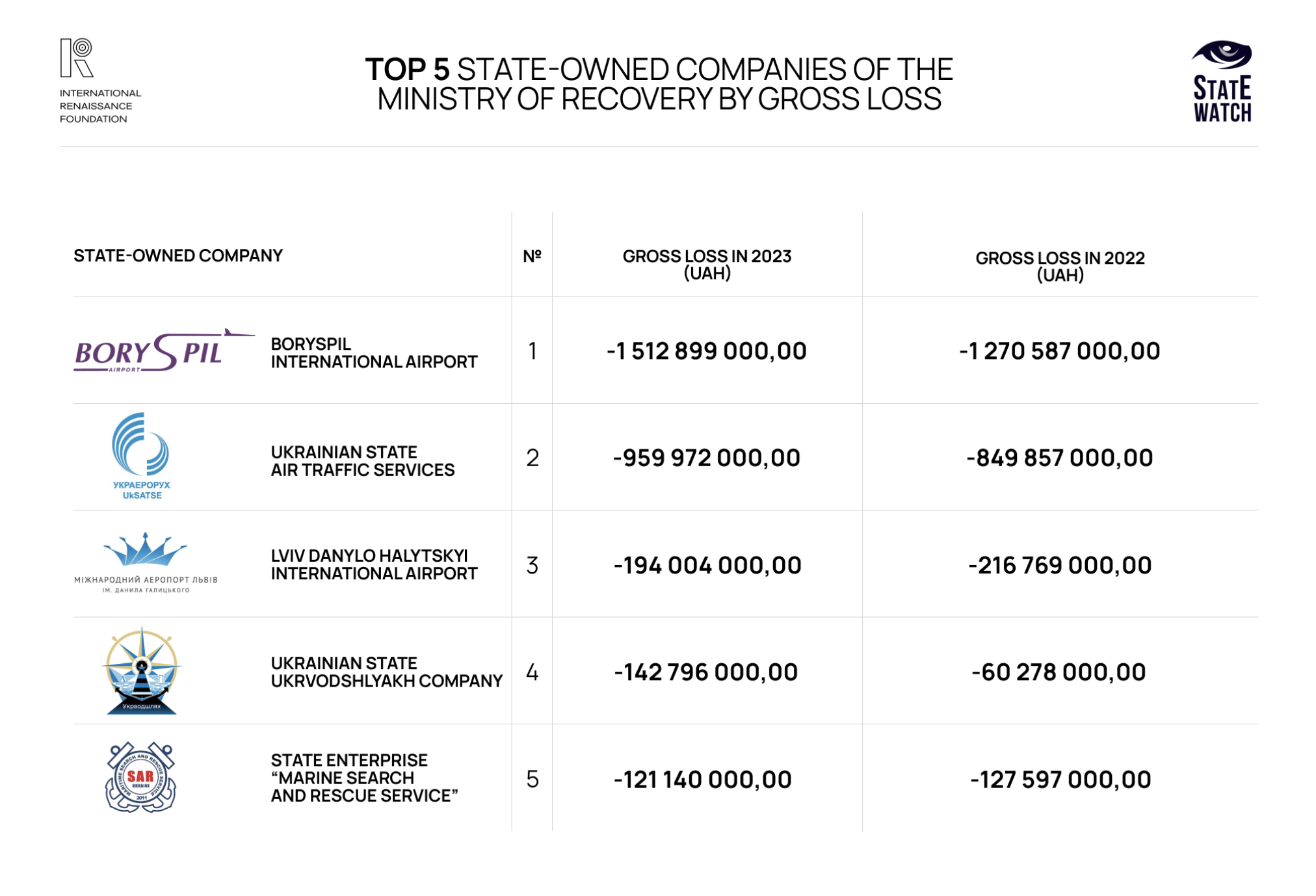
In 2023, state-owned companies of the Ministry of Reconstruction showed a total gross profit of UAH 2.4 billion. In contrast, in 2022, the companies made a total gross loss of UAH 32.1 million. This is reported by the StateWatch think tank with reference to the financial reports of state-owned companies.
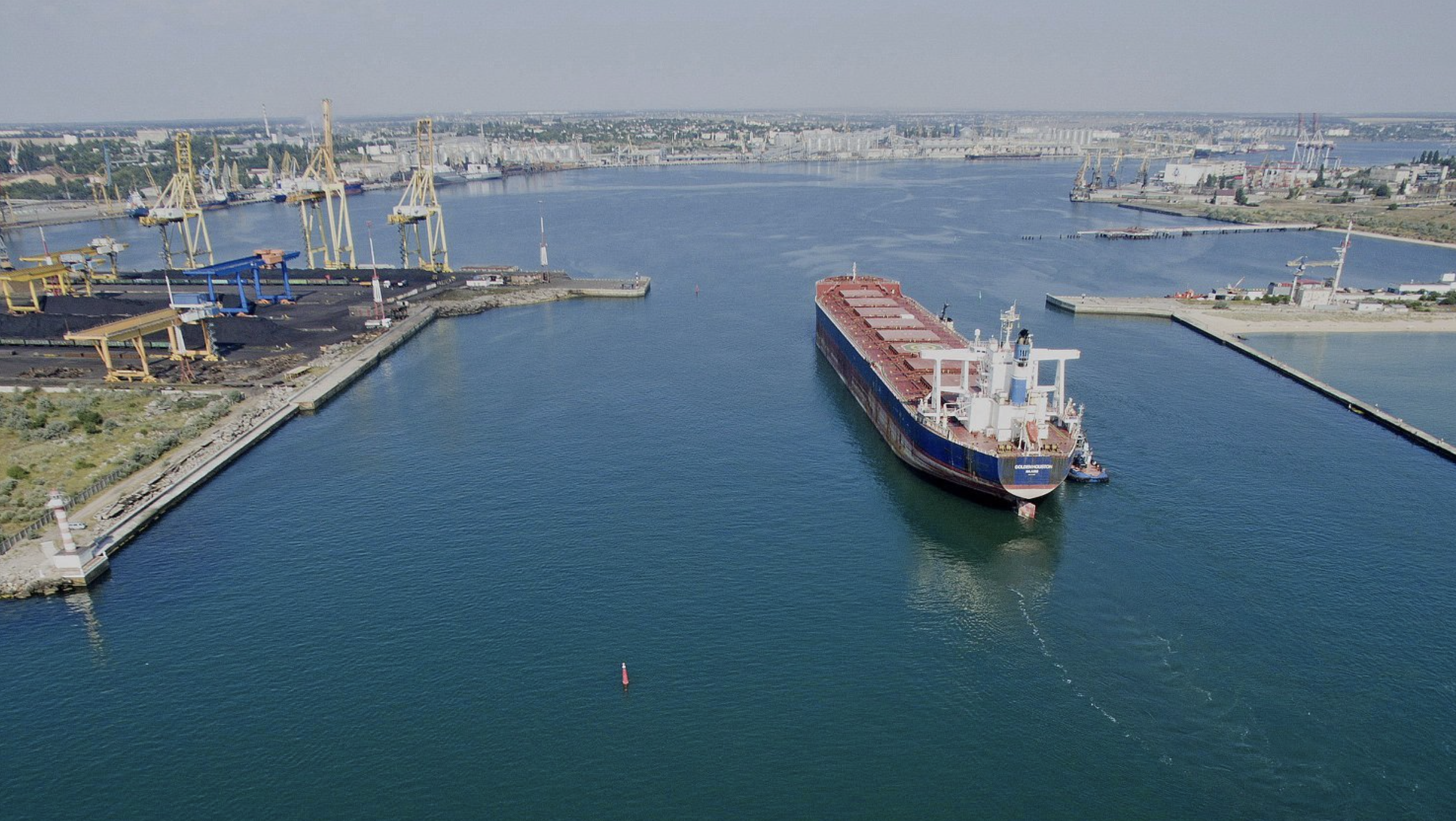
According to the analysis, there is a tendency for military operations to affect the financial results of companies. In particular, port infrastructure prevails among the state-owned companies that received the highest gross income. Meanwhile, the largest gross losses were incurred by companies in the airline industry, which has been banned in Ukraine since the first day of the full-scale invasion on 24 February 2022.
In total, by the end of 2023, the state-owned companies of the Ministry of Reconstruction transferred UAH 8.6 billion in taxes to the state and remain one of the main sources of revenue to the country’s budget.
StateWatch monitors the activities of state-owned companies that may be involved in Ukraine’s post-war reconstruction, and emphasises that, in line with the government’s commitments under the EU’s Ukraine Facility programme, Ukrainian government must ensure an open system of accountability for state-owned companies.
This article was written by StateWatch team with the support of the International Renaissance Foundation within the framework of the project “Anti-Corruption Control over the Activities of State-Owned Enterprises during the Reconstruction of Ukraine”. This publication reflects the position of the authors and does not necessarily coincide with the position of the International Renaissance Foundation.